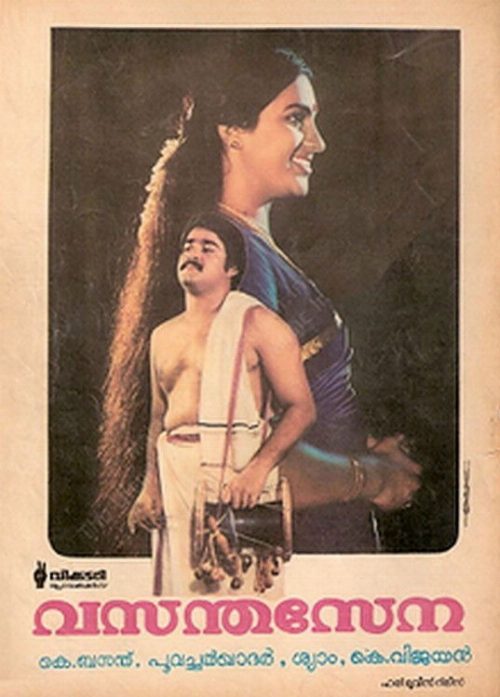
About Vasantha Sena
Mahesh is in love with Merlyn, who belongs to an Anglo-Indian family, but this relation is opposed by Shailaja Varma, his sister. Shailaja too had a love affair a long time back with Devan, who was killed by Shailaja's family. A conflict arises between Mahesh and Shailaja. Now Sidarth loves Shailaja and would like to marry her.
The mid-eighties represented a fascinating transitional period for Malayalam cinema, a time when the industry began aggressively blending traditional family melodramas with sharper, suspense-driven narratives. Vasantha Sena stands as a quintessential artifact of this era, capturing the tension between rigid societal expectations and the impulsive nature of romantic entanglement. By centering its narrative on the friction between siblings and the haunting echoes of past tragedies, the film elevates a standard domestic dispute into a more complex mystery. It is a work that thrives on the interplay of repressed histories and the desperate pursuit of new beginnings, reflecting the evolving tastes of audiences who were moving away from pure sentimentality toward more intricate, character-driven puzzles.
At the heart of the story is the clash between Mahesh and his sister, Shailaja Varma, a dynamic that serves as the primary engine for the film's mounting unease. The introduction of external romantic interests, particularly the Anglo-Indian Merlyn, adds a layer of cultural friction that was quite common in the regional cinema of that decade. Shailaja’s own history, marked by a traumatic loss that stems from familial interference, colors her perspective on her brother’s choices, creating a cycle of resentment that feels both personal and generational. The arrival of Sidarth, who seeks to bridge these emotional divides through matrimony, forces these underlying conflicts to the surface, testing the strength of familial bonds against the weight of long-buried secrets.
For viewers who appreciate the stylistic flourishes of 1980s South Indian thrillers, this film offers a compelling look at how directors like Vijayan K utilized ensemble casts to build atmosphere. The presence of stalwarts like Shankar, Shobana, and Seema provides the gravitas necessary to ground the more melodramatic plot points, ensuring the stakes feel high even when the mystery remains opaque. It is a film for those who enjoy slow-burn storytelling where the environment and the history of the characters are as vital as the plot itself. While it functions as a mystery, it is ultimately a study of how the ghosts of the past dictate the trajectory of the future. Those seeking to understand the foundations of contemporary Malayalam suspense will find this project to be a noteworthy bridge between the classic era and the more experimental narratives that followed, serving as a reminder of how effectively the industry once wove intricate human drama into the fabric of a suspenseful inquiry.
Cast(11)