
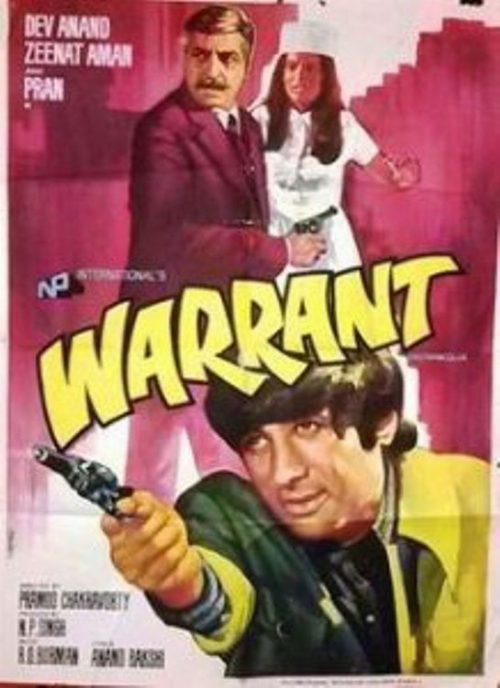
Warrant(1975)
About Warrant
During a jail riot instigated by convict Jaggu (Joginder), the Jailer, Arun Mehra's (Dev Anand) life is threatened and another convict, Dinesh (Satish Kaul), risks his life to save Arun. Arun and his mother, Mrs. Mehra (Sulochana) find out that Dinesh is on death-row for killing noted Professor Ashok Verma. Arun does not believe that Dinesh is guilty and so he arranges his escape from prison. As a result Arun has not only the police, including his own father, Inspector General of Police Mehra (Pran) after him on a manhunt but also underworld don Master (Ajit) and his men; and a cold-hearted female assassin (Zeenat Aman) who has reserved two bullets in her gun for Arun and Dinesh.
Few filmmakers captured the frantic energy of mid-seventies Bollywood quite like Pramod Chakravorty, whose work often balanced high-stakes melodrama with the slick, urban sensibilities of the era. Warrant stands as a quintessential example of this period, arriving at a time when the industry was shifting toward darker, grittier narratives that moved beyond traditional romance. By placing Dev Anand in the role of a prison official who defies his own professional code, the film taps into the classic trope of the righteous individual forced into criminality to seek a higher form of justice. The presence of a star-studded ensemble, including the formidable Pran and the enigmatic Ajit, elevates the production from a standard procedural into a cat-and-mouse game defined by shifting loyalties and intense personal stakes.
What makes this film particularly intriguing for modern viewers is its exploration of the tension between legal duty and moral conviction. While many films of that decade focused on the anger of the common man, this story offers a more nuanced look at the institutional pressures faced by those in uniform. The addition of Zeenat Aman as a lethal figure operating in the shadows introduces a level of unpredictability that was relatively rare for the time, challenging the audience to question who the true antagonists are. Because the narrative hinges on an unlikely alliance between a jailer and a condemned prisoner, it creates a unique dynamic that keeps the tension palpable throughout the runtime. It is a quintessential piece of seventies cinema that relies on strong character archetypes to drive its kinetic, fast-paced plot.
Fans of retro Indian cinema who appreciate the stylish aesthetic of the era will find much to admire here. The film serves as a time capsule for a period when Hindi cinema was experimenting with tighter, more action-oriented scripts that still left room for heavy emotional beats. Whether you are a devotee of Dev Anand’s distinctive screen persona or you simply enjoy the classic thrillers that defined the decade, this movie provides a fascinating window into the evolution of the Indian crime genre. It is best enjoyed by those who appreciate the theatrical flair of the seventies, where high drama and elaborate cat-and-mouse chases were the gold standard for entertainment. By blending a desperate prison break with a complex web of underworld intrigue, the director manages to craft a story that feels both urgent and timeless.