About Where There's a Will
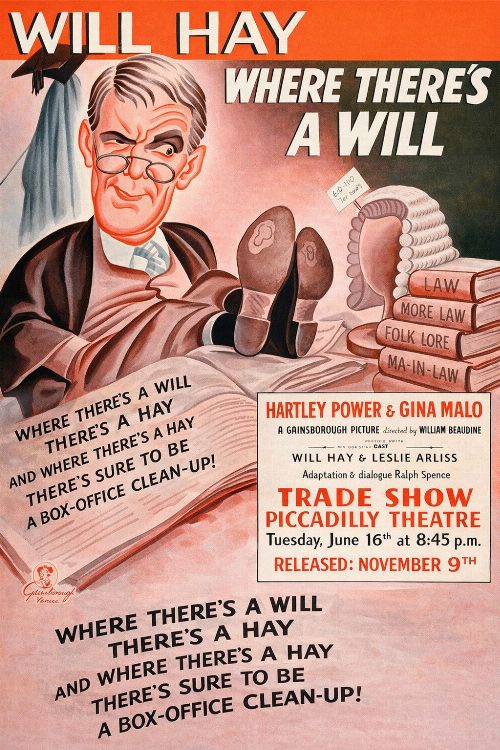
Will Hay plays the pennyless, bungling solicitor Benjamin Stubbins, who arrives at his office to find his insolent office boy (Graham Moffatt) with his feet up on the desk, reading a wild west magazine, which Hay confiscates so that he can read it later. Stubbins later takes a job from a group of Americans who claim they want him to track down some ancestors of theirs in Scotland. In reality however they want to use his office so they can rob a safe in the room immediately below his office. Stubbins takes the job (which is designed to keep him out of the office). In the end Stubbins realises his mistake and at a Christmas Eve fancy dress party he informs a group of carol singing policeman about the Americans nefarious activities
The British comedy landscape of the thirties remains defined by the bumbling yet endearing screen persona of Will Hay, an actor whose work resonates with a specific brand of chaotic charm that predates the slapstick sophistication often seen in later global cinema. In Where There is a Will, audiences are treated to a masterclass in low-stakes absurdity where the protagonist, a perpetually struggling legal professional, finds himself hopelessly out of his depth. Unlike the high-octane thrillers or the burgeoning musical spectacles of the era, this film relies entirely on the comedic friction between a hapless authority figure and the unscrupulous characters surrounding him. For those who appreciate the roots of the modern heist comedy, this production offers a fascinating look at how narrative tension was built through sheer incompetence rather than technological prowess.
While contemporary Indian cinema often celebrates the larger-than-life hero who effortlessly navigates complex moral dilemmas, the character of Benjamin Stubbins serves as a humorous antithesis to that archetype. Much like the regional comedies that thrive in the Telugu or Malayalam industries today, which often lean into the relatable failures of the common man, this film finds its strength in the vulnerability of its lead. The premise, involving a dubious assignment that masks a criminal enterprise, creates a classic fish-out-of-water scenario that feels surprisingly timeless. It captures a specific moment in British comedic history when the working office was transformed into a playground for farce, proving that a sharp script and a talented ensemble can turn a mundane setting into a source of constant amusement.
Viewers who enjoy character-driven humor and classic ensemble dynamics will find much to admire in this early sound-era gem. It is particularly recommended for students of cinema who want to trace the evolution of the bumbling detective trope that has since traveled across borders and influenced comedic performances in various global industries. William Beaudine directs with a pace that keeps the misunderstandings piling up, ensuring that the audience is always one step ahead of the unfortunate solicitor. By stripping away the polish found in more expensive studio projects, the film highlights the raw talent of its cast, specifically the rapport between the leads. Whether you are a fan of vintage Hollywood or simply interested in the historical blueprints of comedic storytelling, this production stands as a testament to the enduring appeal of the underdog who tries, fails, and somehow stumbles toward a resolution.
Cast(17)