
About Why Do They Write on Walls?
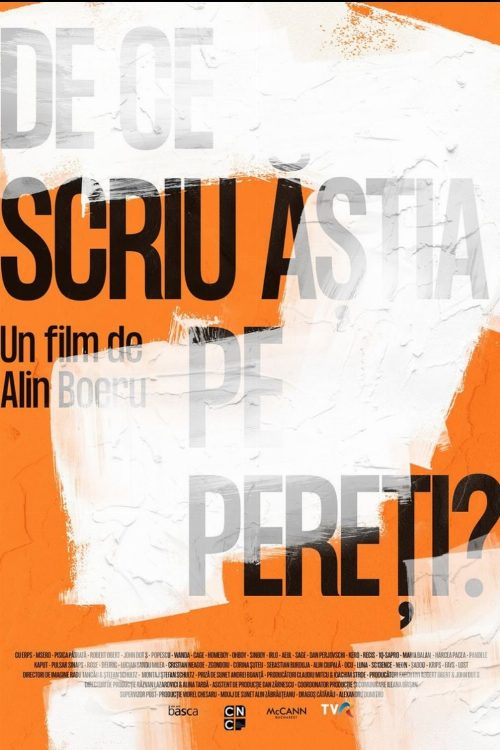
Going through the most important moments in Romania's recent history, a simple corporate employee becomes a documentary film director and meets the most important representatives of the graffiti and street art phenomenon. The director turns into an active character and becomes the viewer's personal guide through the bowels of urban culture, experiencing a little of the raw sensations that graffiti artists and street artists have when drawing in public space.
The intersection of political evolution and clandestine artistic expression finds a fascinating lens in Why Do They Write on Walls, a documentary that moves far beyond a standard chronicle of urban aesthetics. While modern audiences in the Indian film landscape are accustomed to documentaries that celebrate historical icons or specific craft traditions, this Romanian project adopts a surprisingly intimate, almost gonzo-journalistic approach. Director Alin Boeru breaks the traditional barrier between the observer and the observed by transitioning from his mundane professional life into the chaotic, adrenaline-fueled world of street art. This shift transforms the film from an encyclopedic study into a visceral journey, inviting viewers to experience the tactile risk of claiming public spaces through paint and aerosol.
For those who track the global evolution of street culture, the film serves as a vital bridge between the rigid structures of post-communist history and the fluid, rebellious energy of contemporary graffiti. By bringing together figures like Deliric and Dan Perjovschi, the narrative maps the ideological shifts of Romania through the raw markings left on its infrastructure. It captures a specific tension that will resonate with fans of independent cinema who appreciate stories about the struggle for creative autonomy against societal constraints. The film effectively argues that these markings are not mere vandalism but are essential, living records of a society in transition, echoing the way regional Indian filmmakers often use street-level imagery to comment on political malaise or urban displacement.
This documentary is perfectly positioned for viewers who prefer their non-fiction storytelling to be subjective and experiential rather than purely didactic. Boeru succeeds because he does not position himself as an untouchable expert; instead, he presents himself as a curious seeker, making the audience feel like an accomplice in his nocturnal explorations. It is a compelling choice for anyone interested in the sociology of art or the mechanics of subcultures that operate in the shadows of major cities. As the narrative peels back the layers of Romania's recent past, it offers a universal lesson on why the human impulse to leave a trace on the environment remains one of the most powerful forms of defiance. It is a bold, energetic entry into the world of documentary filmmaking that proves the most honest histories are often written on the sides of buildings rather than in textbooks.