About Anarkali
Prince Jahangir loves the slave girl Anarkali, which creates a serious conflict between Prince Jahangir and his father, Mughal emperor Akbar.
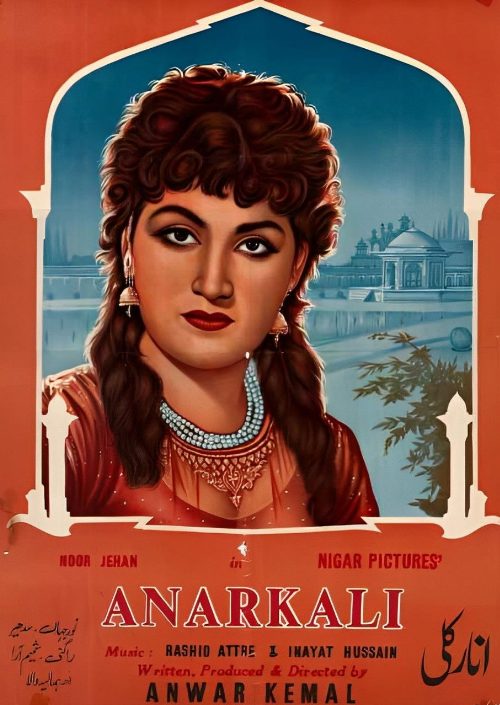
Stepping back into the golden era of cinema, Anarkali remains a monumental achievement that captures the grandiosity of historical tragedy through a deeply melodic lens. Released in 1958, this production represents a pinnacle of the Urdu film industry, showcasing how mid-century filmmakers utilized the Mughal court as a backdrop to explore the eternal tension between personal desire and imperial duty. At its heart, the film functions as a sweeping romantic saga, centering on the forbidden bond between a royal heir and a woman from a lower social standing. By elevating this legendary folklore, the narrative transcends simple costume drama to become a meditation on the heavy costs of defiance against rigid dynastic expectations.
The film is defined by the iconic presence of Noor Jehan, whose performance adds an essential layer of emotional resonance that defines the entire viewing experience. Her involvement ensures that the musical sequences are not merely decorative but are integral to the storytelling, mirroring the internal turmoil of characters caught in a web of palace intrigue. Director Anwar Kamal Pasha displays a keen ability to balance these intimate character arcs with the opulent visual language demanded by such a high-stakes historical setting. For audiences who appreciate the meticulous world-building found in classic Indian and Pakistani cinema, this work serves as an essential touchstone, highlighting an era where dialogue delivery and song composition were treated with the same level of artistic rigor as the cinematography.
Viewers who enjoy period pieces that emphasize dramatic stakes and lyrical storytelling will find much to admire here. The narrative architecture relies on the classic conflict between a stern, tradition-bound emperor and his rebellious son, a trope that remains timeless even decades later. Because the film is rooted in a well-known cultural myth, it creates a unique experience where the audience understands the gravity of the stakes before the story even unfolds. Rather than relying on modern technical spectacle, the production leans into the charisma of its lead actors and the enduring power of its script. It stands as a testament to how traditional storytelling techniques can sustain interest across generations, appealing to those who appreciate the foundational works that shaped the stylistic trajectory of regional cinema in South Asia. Whether one is a scholar of film history or simply a fan of grand, old-world romances, this piece provides a compelling look at the sophisticated artistic climate of the late fifties.