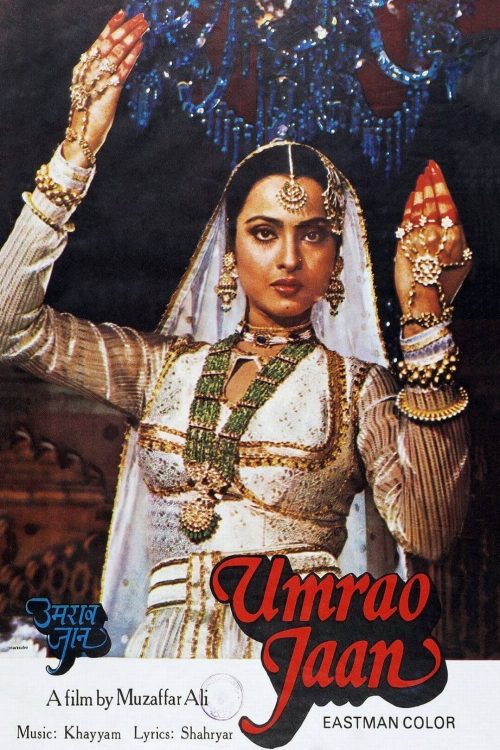
About Umrao Jaan
Amiran is sold to a brothel by a corrupt cop after her father testifies against him. Many years later, she grows up to be an accomplished poetess and a renowned courtesan, Umrao Jaan.
Few cinematic achievements capture the haunting intersection of aesthetic beauty and profound personal sorrow quite like the 1981 masterwork directed by Muzaffar Ali. Set against the crumbling grandeur of nineteenth century Lucknow, the narrative follows a young girl abducted from her home and thrust into the sophisticated yet stifling world of a courtesan house. As she matures into the legendary poetess known as Umrao Jaan, the film transforms into a meditative study on identity, displacement, and the fleeting nature of love. Unlike many period dramas that focus on grand political shifts, this production maintains a laser focus on the interior life of its protagonist, using the intricate customs of the tawaif culture to reflect her search for autonomy in a society that views her primarily as an object of desire.
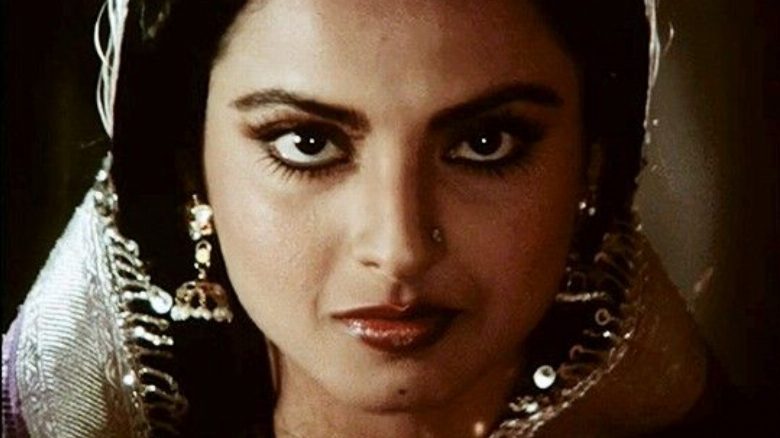
The film stands as a pinnacle of Hindi cinema, renowned for its meticulous period detailing and an immersive soundscape that remains unmatched by modern standards. Rekha delivers a career defining performance, imbuing the title character with a weary wisdom and a soulful elegance that transcends the screen. Her portrayal captures the tragedy of a woman who is celebrated for her artistic brilliance yet perpetually denied the stability of a conventional life. The interplay between the evocative ghazals and the understated, nuanced acting elevates the material beyond a typical historical romance. It is a visual and auditory feast that demands patience, rewarding the viewer with its slow burn approach to storytelling and its refusal to rely on melodramatic tropes.
Audiences who appreciate atmospheric filmmaking and historical dramas with deep emotional resonance will find this classic essential viewing. It acts as a bridge between the classical traditions of Indian performance arts and the sensibilities of twentieth century filmmaking, making it a perfect entry point for those interested in the golden era of Urdu-language cinema. Muzaffar Ali demonstrates a masterful command of visual language, utilizing opulent sets and delicate lighting to mirror the emotional fragility of his characters. For those seeking a film that lingers in the memory long after the credits roll, this exploration of artistic endurance and the cruelty of fate remains an undisputed benchmark. Whether one is a seasoned connoisseur of Indian classics or a newcomer exploring the rich tapestry of the subcontinent’s cinematic heritage, the elegance and thematic weight of this production ensure it remains an indelible part of the cultural canon.
Cast(9)