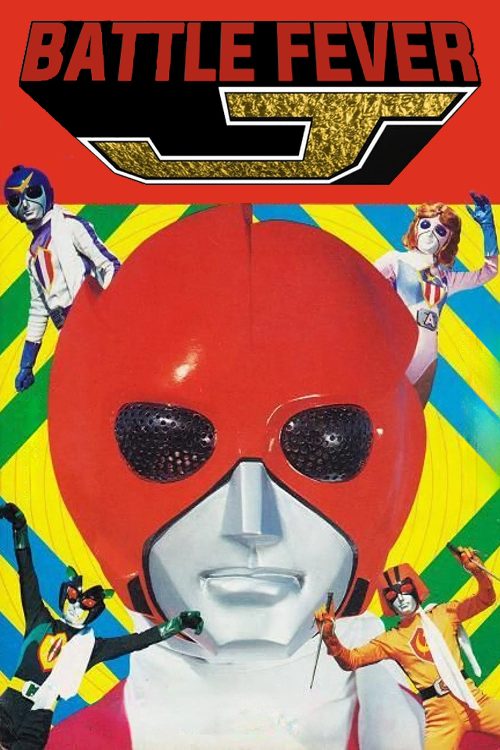
Battle Fever J: The Movie(1979)
About Battle Fever J: The Movie
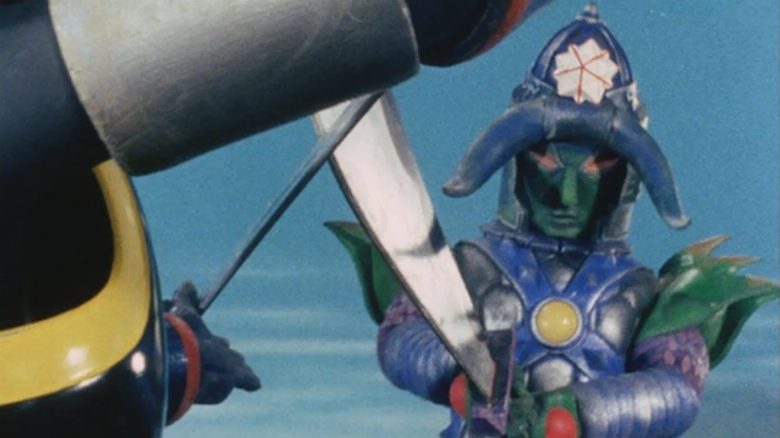
Egos kidnaps the children of Information Supervisor Sakaguchi, Yoko and Kenichi. They then blackmail him into stealing the blueprints and completion status of the Battle Fever robo. Tetsuzan Shogun, who joined the Defense Department at the same time as Sakaguchi, is greatly concerned and confronts him. Sakaguchi escapes but vows to make amends. He appears at Egos factory, where they too are building a giant robo, and discloses a false timetable. When Egos orders them killed, Sakaguchi reveals dynamite strapped to his body. He backs away with his children and gets them to safety. He then returns to the factory, and blows himself up to destroy it. Unfortunately, his sacrifice is in vain, as their evil robo is already completed. But Battle Fever’s giant robo is also complete and ready to save the day!
Few cinematic relics capture the raw, neon-soaked energy of late seventies Japanese tokusatsu quite like Battle Fever J: The Movie. Emerging during a transformative era for the Super Sentai franchise, this feature-length extension of the television series serves as a high-stakes expansion of the colorful, spandex-clad heroism that defined a generation of science fiction storytelling. While modern audiences might associate the genre primarily with its global derivatives, this particular entry highlights the foundational grit and melodrama that characterized the Toei production house during its prime. It moves beyond the standard monster-of-the-week formula by centering its stakes on a deeply personal act of sacrifice, grounding the outlandish sci-fi spectacle in a surprisingly somber narrative thread regarding family duty and military integrity.
The film follows the agonizing choices of an information official whose children are seized by the nefarious Egos organization. Rather than relying solely on the signature team dynamics that fans of the series expect, the story leans into a tense espionage framework, tasking a desperate father with navigating a web of blackmail and corporate sabotage. This shift in focus is what distinguishes the movie from its episodic counterparts; it treats the threat of the Egos giant robot not just as a technological challenge, but as a looming existential dread that demands a permanent price. The result is an experience that feels both vintage and urgent, showcasing the transition from traditional stunt work to the early integration of massive robotic combat that would eventually become the bedrock of the genre.
Viewers who enjoy the aesthetic charm of practical effects and the earnest, theatrical acting style of the Showa era will find this a quintessential watch. It is positioned as a bridge between the humble roots of costumed action and the more elaborate, scale-driven battles that would dominate the eighties. For those interested in the history of global cinema, it serves as a fascinating companion to the regional action trends seen in Indian industries of the same period, where the balance between heroic archetypes and heavy-duty stunt sequences was also reaching a fever pitch. With its blend of emotional stakes and the inevitable, larger-than-life robotic showdown, this film remains a vital piece of the puzzle for anyone looking to understand the evolution of heroic fantasy. It is a straightforward, punchy, and relentless ride that rewards those who appreciate the foundational mechanics of the superhero mythos before the age of digital intervention.
Cast(17)