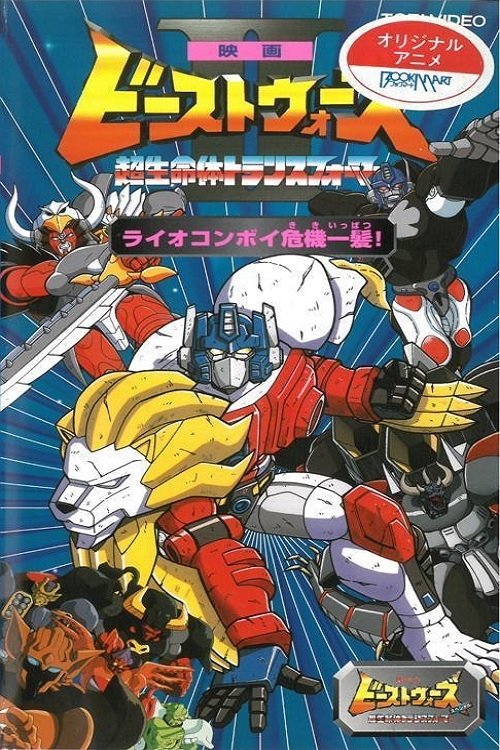
Beast Wars II: Lio Convoy's Close Call!(1998)
About Beast Wars II: Lio Convoy's Close Call!
A spaceship carrying a Dimentional Warp Gate crashes on Planet Gaea. Galvatron tricks Lio Junior into handing over the control of the gate. With the power to cross time and space, Galvatron intends to bring Megatron to Gaea. But Gigastorm mistakenly brings the behemoth Majin Zarak instead. The Maximals are overpowered by this Predacon giant, so Magnaboss using the gate to call in Optimus Primal...
While the global landscape of animation continues to evolve with cutting edge digital techniques, there remains a distinct, kinetic charm to the late nineties era of Japanese science fiction storytelling. Beast Wars II Lio Convoys Close Call stands as a quintessential artifact of this period, capturing the high stakes energy that defined the era of transforming robots and intergalactic conflicts. Directed by Akira Nishimori, this feature length expansion of the popular animated series serves as a bridge between episodic character development and grand scale cinematic spectacle. It captures the unique sensibilities of Japanese animation from the late nineties, where character archetypes were often pushed to their absolute limits against cosmic threats that could reshape the fabric of reality itself.
The narrative centers on the precarious balance of power on the mysterious Planet Gaea, where a dimensional gateway becomes the focal point for a desperate struggle between opposing factions. What makes this entry particularly compelling is its commitment to the escalating stakes of its antagonists. Instead of a straightforward confrontation, the plot weaves a web of deception and unintended consequences, as the villains attempt to manipulate spacetime for their own nefarious ends. For viewers who appreciate the lore of the franchise, the arrival of colossal, ancient entities provides a refreshing shift from the typical skirmishes, raising the bar for the Maximals who find themselves significantly outmatched by the sheer scale of the opposition they face.
Fans of retro science fiction and those who enjoy the specific aesthetic of nineties era cel shaded or early computer assisted animation will find plenty to analyze here. It functions as a bold experiment in pacing, demanding that the protagonists adapt to threats that transcend simple brute force. The film is perfectly suited for audiences who enjoy high concept narratives that do not shy away from the operatic nature of their source material. By focusing on the interplay between tactical ingenuity and overwhelming power, the film manages to carve out a memorable niche within the broader history of the franchise. Even decades later, it serves as a testament to how directors like Nishimori could elevate a toy based premise into a genuine adventure that resonates with the dedicated spirit of speculative fiction enthusiasts.