About Being Julia
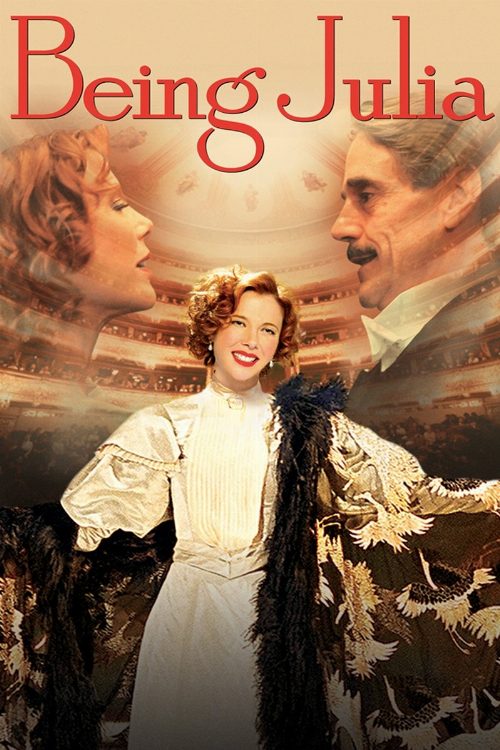
Julia Lambert is a true diva: beautiful, talented, weathly and famous. She has it all - including a devoted husband who has mastermined her brilliant career - but after years of shining in the spotlight she begins to suffer from a severe case of boredom and longs for something new and exciting to put the twinkle back in her eye. Julia finds exactly what she's looking for in a handsome young American fan, but it isn't long before the novelty fling adds a few more sparks than she was hoping for. Fortuately for her, this surprise twist in the plot will thrust her back into the greatest role of her life.
The theatrical world has long served as a fertile playground for stories about the blurred lines between performance and reality, yet few films capture the delicious artifice of the stage quite like Being Julia. Set against the glamorous backdrop of London in the late 1930s, the narrative centers on an iconic leading lady who possesses everything the public could possibly desire: fame, adoration, and a life of luxury. However, as she approaches middle age, the persistent hum of routine begins to stifle her spirit, leading her to seek a spark of spontaneity outside of her marriage. This pursuit of passion brings her into the orbit of a charismatic younger man, a decision that initially feels like a harmless diversion but quickly spirals into an intricate game of emotional chess. For viewers who appreciate the biting wit and sophisticated character studies often found in contemporary Indian dramas that explore the complexities of celebrity identity, this film offers a masterclass in tone and temperament.
Annette Bening delivers a performance that demands total attention, embodying a woman who treats her own life as a series of scripted scenes. Her work here resonates with the kind of layered, star-driven vehicles that audiences in the Hindi and Telugu industries have long championed, where the lead actor must carry the weight of the entire production through nuance and charisma alone. The film is positioned as a witty exploration of how we construct our public personas to shield our private insecurities. It is an ideal watch for those who enjoy sharp dialogue, period aesthetics, and narratives where the protagonist is not necessarily virtuous but undeniably compelling. The chemistry between Bening and Jeremy Irons provides a grounded, often cynical counterpoint to the romantic escapades, grounding the whimsy in a very real, albeit cold, marital dynamic.
Director Istvan Szabo manages to balance the theatricality of the setting with a genuine sense of intimacy, ensuring that the stakes feel personal even when they are played out on a grand scale. The film avoids the trap of becoming a standard romantic comedy by leaning heavily into its dramatic roots and the protagonist’s manipulative brilliance. It serves as a reminder that the best performances are not always found on a stage, but in the calculated maneuvers we make when we feel our relevance beginning to fade. Fans of character-driven cinema will find much to admire in the way the script transforms a midlife crisis into a high-stakes performance, proving that for a true artist, even a personal disaster can be repurposed into a triumphant final act.
Cast(19)