
About Big Deal
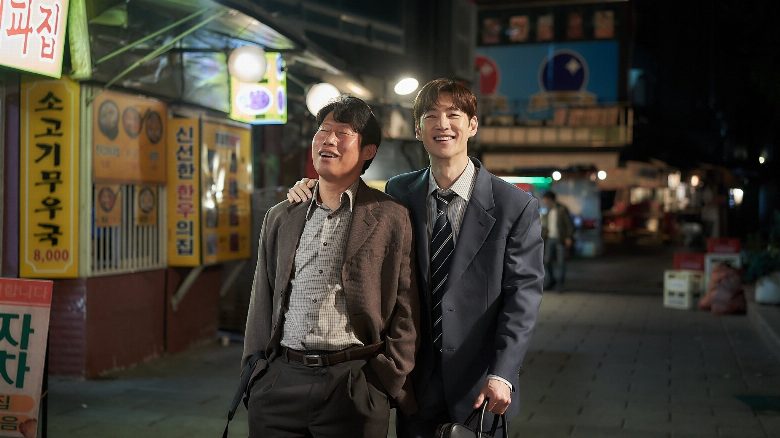
In 1997, when the Asian financial crisis hit Korea, Gukbo, the number one Soju company is on the brink of bankruptcy. In the high-stakes market of M&A, In-beom, a young ambitious associate at global investment firm Solquin, heads back home to take Gukbo as his first target. Hiding his greediness, In-beom approaches Jong-rok, an executive loyal to Gukbo, as an innocent consultant aiming to rehabilitate Gukbo.
The 1997 Asian financial crisis remains a profound scar on the South Korean national psyche, serving as a visceral backdrop for Big Deal, a corporate drama that trades physical combat for the cutthroat intensity of boardroom maneuvering. Rather than focusing on the macro-level history, the film zeroes in on the predatory nature of global capital through the eyes of In-beom, an associate at an international investment firm played by Lee Je-hoon. The story thrives on the tension between cold-blooded financial ambition and the fierce, almost nostalgic loyalty employees feel toward their struggling local institutions. By positioning a beloved national soju brand as the target of a hostile takeover, the film taps into a specific cultural anxiety about the loss of homegrown identity in the face of rapid globalization.
Lee Je-hoon brings his signature sharp-edged charisma to the role of In-beom, a character whose dual identity as both a prodigal son and a corporate shark promises a complex psychological arc. His dynamic with Choi Young-jun, who portrays the steadfast executive Jong-rok, is the engine of the film. This is not a typical thriller; it is a claustrophobic character study that forces the audience to question the morality of modern business. For viewers who have appreciated the grit of South Korean cinema in films like Default, Big Deal offers a more personal, localized perspective on how economic collapse reshapes human relationships and forces individuals to compromise their ethics for the sake of survival.
This production stands out by stripping away the usual action-heavy tropes often associated with Korean thrillers, opting instead for a slow-burn narrative that emphasizes dialogue and strategic deception. It is a compelling choice for cinephiles who enjoy high-stakes dramas that mirror the intellectual intensity of financial procedurals while remaining deeply rooted in emotional stakes. As the industry continues to push toward more sophisticated, character-driven storytelling, this film appears to be a major entry that balances universal themes of greed with a uniquely Korean sense of workplace camaraderie. Whether you are a fan of Lee Je-hoon or simply fascinated by stories of corporate intrigue, this project is positioned to be a standout exploration of how power shifts when a nation is pushed to the edge of ruin.
Cast(19)