
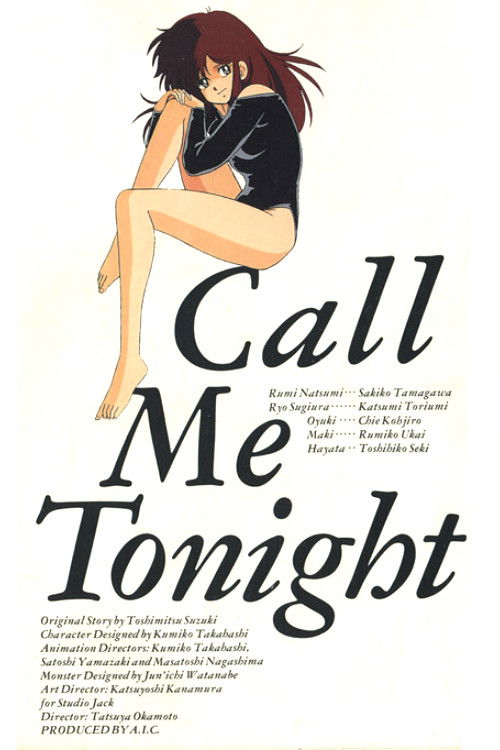
Call Me Tonight(1986)
About Call Me Tonight
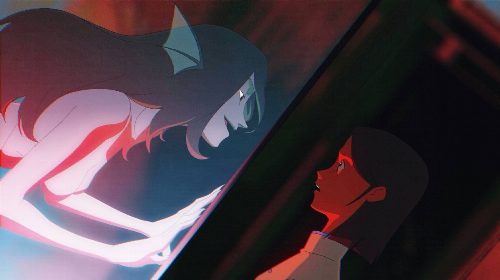
Rumi, a phone sex operator making ends meet, falls for her most challenging client yet: Ryo, a young man who transforms into a monstrous beast when he's aroused. But Rumi’s not the only one with her eye on the cursed caller.
Few cinematic experiences capture the strange, neon-soaked eccentricity of eighties Japanese animation quite like Call Me Tonight. While contemporary global audiences often associate anime with polished, high-budget epics, this cult classic represents a wilder era of experimental storytelling where genre boundaries were treated as mere suggestions. The premise follows a woman navigating the precarious gig economy of her time by working as a telephone operator, only to find her professional life colliding with a supernatural complication. Her primary client is a young man afflicted by a bizarre hex that triggers a monstrous metamorphosis whenever his passions are stirred. This collision of domestic intimacy and body horror creates a tonal tightrope walk that feels remarkably distinct from the standard romantic comedies emerging from the Indian film industries, providing a fascinating study in how international animation has historically toyed with subversive tropes.
The film serves as an ideal recommendation for viewers who appreciate the stylistic boldness of the mid-eighties aesthetic, where hand-drawn fluidity often prioritized mood and atmosphere over rigid narrative structure. Much like the bold experiments found in the early days of the Japanese video animation boom, the project leans heavily into the absurdity of its own concept. It manages to balance a lighthearted romantic core with the unsettling visual flair associated with horror, a combination that feels ahead of its time. Fans of retro animation who enjoy films that challenge expectations will likely find the interplay between the protagonist and her cursed caller compelling. It is a work that thrives on its own eccentricities, favoring a bizarre, stylized reality that remains memorable long after the credits roll.
For those tracking the evolution of character-driven genre blends, Tatsuya Okamoto exhibits a keen eye for maximizing the potential of limited animation to convey psychological tension. By placing the narrative focus on a high-stakes, unconventional romance, the film positions itself as a curiosity for cinephiles who enjoy exploring the fringes of animation history. While modern audiences might be more accustomed to the grand spectacles coming out of the current Telugu or Hindi film circuits, there is an enduring appeal in these smaller, genre-bending tales. Call Me Tonight does not attempt to be a universal crowd-pleaser; instead, it carves out a niche space that rewards viewers willing to embrace its chaotic, darkly humorous spirit. It stands as a testament to an era when animation was a playground for the strange, the erotic, and the supernatural, all wrapped into a singular, unforgettable experience.