About Camp de Thiaroye
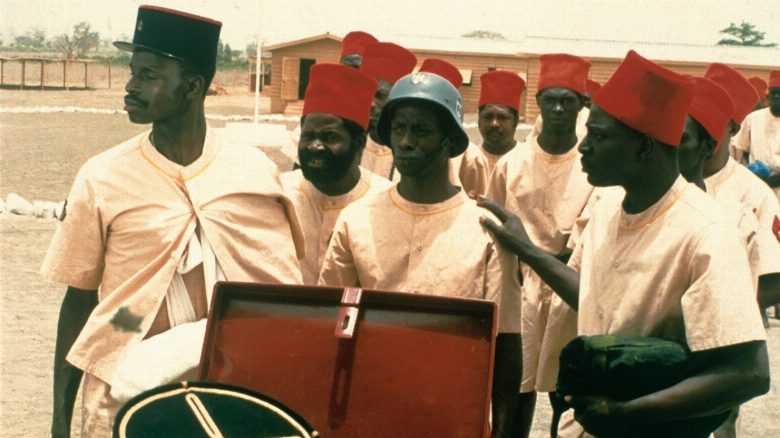
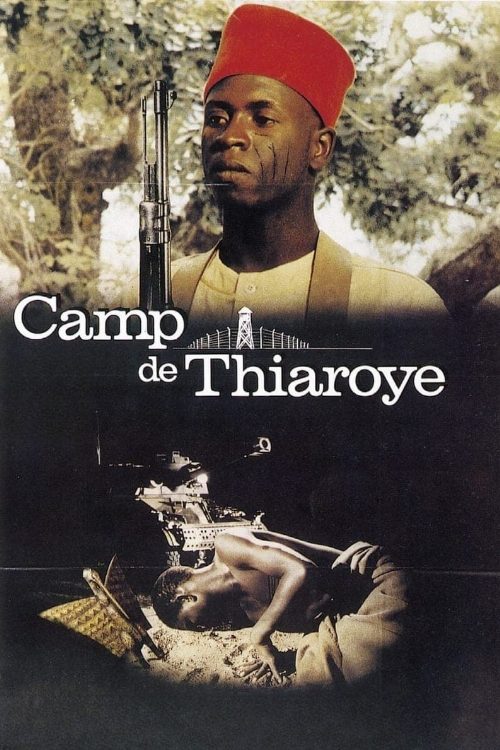
A Senegalese platoon of soldiers from the French Free Army are returned from combat in France and held for a temporary time in a military encampment with barbed wire fences and guard towers in the desert. Among their numbers are Sergeant Diatta, the charismatic leader of the troop who was educated in Paris and has a French wife and child, and Pays, a Senegalese soldier left in a state of shock from the war and concentration camps and who can only speak in guttural screams and grunts.
History often prioritizes the narratives of the victors while silencing the contributions of those who fought in the shadows of empires. Camp de Thiaroye, the 1988 masterpiece co-directed by Ousmane Sembene and Thierno Faty Sow, serves as a searing corrective to this erasure by focusing on the forgotten soldiers of the French Free Army. By centering the story on a group of Senegalese veterans returning home from the battlefields of Europe only to find themselves trapped behind the barbed wire of a colonial transit camp, the film exposes the deep-seated hypocrisy inherent in the relationship between the colonizer and the colonized. It is a haunting exploration of identity, loyalty, and the crushing realization that the liberty these men fought for in Europe was not intended to be extended to their own people in Africa.
The film distinguishes itself through its stark, unflinching portrayal of the psychological toll of war, most notably embodied by the character of Pays. While other soldiers grapple with the complexities of colonial hierarchy and racial prejudice, Pays represents the visceral, wordless trauma of the concentration camps, a stark contrast to the intellectualized resistance offered by the educated Sergeant Diatta. This juxtaposition creates a profound tension that resonates with anyone familiar with the anti-colonial movements that defined mid-twentieth-century global cinema. For viewers who appreciate the socially conscious storytelling found in contemporary parallel cinema across India or the bold political statements of modern Malayalam dramas, this film offers a rigorous intellectual challenge that feels as urgent today as it did decades ago.
Ousmane Sembene, often referred to as the father of African cinema, brings his signature blend of literary depth and structural clarity to this harrowing historical account. His direction ensures that the film never descends into mere melodrama, instead maintaining a tight focus on the systemic betrayals that lead to the inevitable friction between the soldiers and their French commanders. This is not a typical war movie filled with grand battlefield maneuvers; rather, it is a psychological chamber piece that highlights the claustrophobia of institutionalized racism. Audiences who enjoy historical dramas that prioritize human dignity over spectacle will find this an essential viewing experience. It invites us to consider the heavy price of freedom and the persistent, often violent, nature of colonial structures long after the smoke of international conflicts has cleared.