About Der Pauker
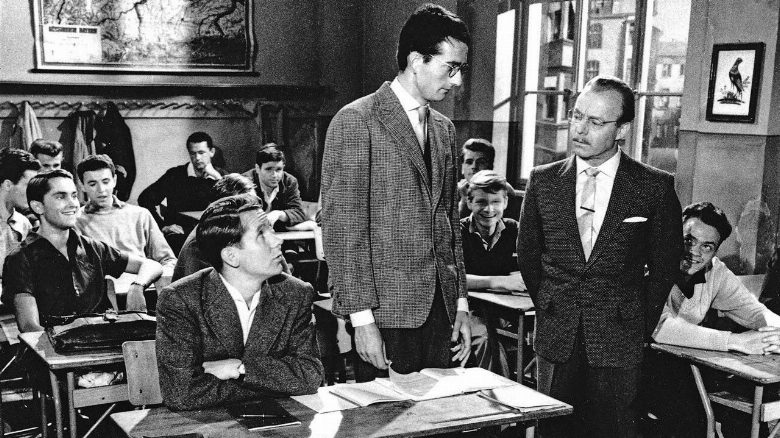
Secondary-school teacher Dr. Hermann Seidel is transferred from his sleepy, provincial grammar school to the big city. Here, he has to deal with a class of obstreperous students, where his outmoded teaching methods help him precious little. With the aid of good friends, however, he manages to turn things around, and he soon gets a handle on the students in his very own way…
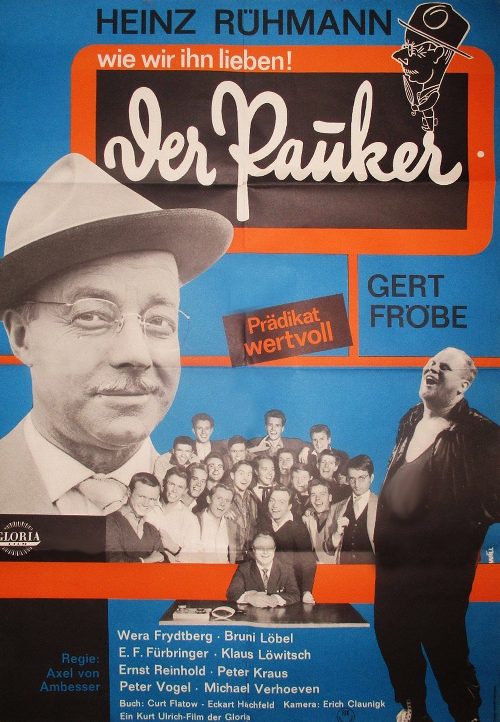
Der Pauker stands as a quintessential artifact of late fifties West German cinema, capturing a specific moment of post-war cultural transition where the rigid hierarchies of the classroom began to clash with the burgeoning restlessness of a new generation. Directed by Axel von Ambesser and anchored by the legendary Heinz Ruehmann, the film functions as a bridge between traditional European morality plays and the youthful energy that was starting to define the era. While modern audiences often associate school-based comedies with high-stakes dramedy or satire, this production approaches the academic environment with a gentle, observational humor that highlights the generational divide between a seasoned, somewhat formal educator and a group of students eager to test their independence. The inclusion of teen idol Peter Kraus adds a fascinating layer, as it mirrors the real-world influence of rock and roll culture that was beginning to permeate German society at the time.
For viewers who enjoy classic cinema that balances lighthearted social commentary with character-driven narratives, this film offers a charming look at how authority figures were being re-imagined on screen during the Wirtschaftswunder period. Ruehmann, a titan of the industry, excels at portraying the lovable outsider, providing a performance that feels both grounded and quintessentially human. His transition from a quiet rural environment to the chaotic energy of an urban institute serves as an effective mechanism for exploring themes of adaptability and mutual respect. The film manages to avoid becoming overly didactic, choosing instead to focus on the chemistry between the cast members and the inevitable thawing of tensions between the stern teacher and his spirited charges.
This project is an essential watch for those interested in the evolution of German comedy and the historical context of educational dramas. It sits comfortably alongside other period pieces that examine the friction between established order and the shifting values of youth culture. By emphasizing empathy over discipline, the narrative provides a timeless message that resonates beyond its fifties setting. Whether you are a fan of European vintage cinema or simply appreciate stories about the transformative power of mentorship, this film remains a standout in the filmography of the era. It serves as a reminder that even in the most traditional settings, a humanistic approach to leadership can bridge the widest of social gaps, making it a compelling piece of cinema history that has aged with surprising grace.
Cast(11)