
About El Hakim
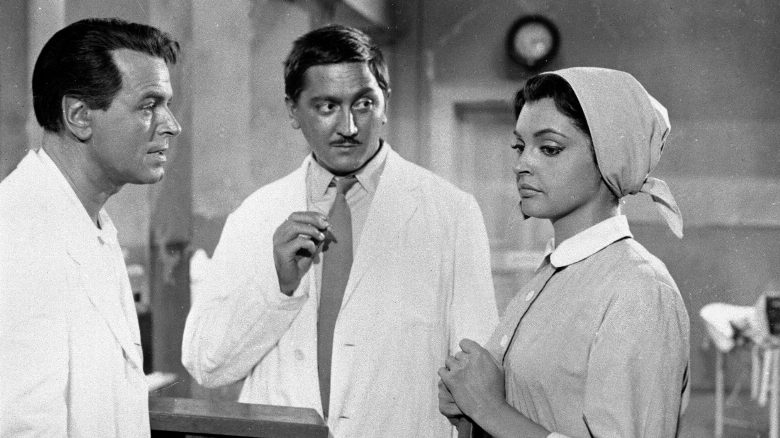
A young Egyptian doctor leaves his uneducated, dance girl lady friend behind while he focuses on fighting poverty and superstition. Years later, rich and famous, on a trip to Paris he discovers her again, in a night club.
Navigating the complex interplay between professional ambition and the ghosts of one's past, El Hakim stands as a fascinating artifact of mid-century German cinema. Rolf Thiele directs this drama with an eye for the stark contrasts that define the trajectory of a man who attempts to outrun his humble origins. The narrative centers on an ambitious Egyptian physician who sacrifices his romantic ties to a woman steeped in the world of cabaret to pursue a life dedicated to medical relief and social reform. This choice sets the stage for a poignant exploration of class consciousness and the inevitable friction that occurs when high-minded idealism collides with the sentimental attachments of youth.
The film serves as a compelling bridge between the traditional storytelling of the nineteen-fifties and the burgeoning interest in global settings that would eventually influence international dramatic tropes. For contemporary viewers, the film offers a window into the thematic preoccupations of the era, particularly the tension between the modernizing impulse of a burgeoning professional class and the lingering pull of the environments they leave behind. O.W. Fischer delivers a performance that anchors the film, capturing the internal conflict of a protagonist who has traded his emotional core for global recognition. Watching him navigate the opulent streets of Paris while confronting a figure from his previous life creates a palpable sense of unease that resonates even decades later.
Audiences who appreciate character-driven dramas that prioritize moral ambiguity over clear-cut resolutions will find much to admire here. It is particularly well-suited for cinephiles interested in the evolution of European character studies, as well as those intrigued by how early post-war dramas portrayed the clash between personal success and personal integrity. While the setting is geographically distinct, the emotional stakes feel universal, mirroring the timeless struggle of the self-made individual who realizes that intellectual growth often comes at the cost of genuine connection. By focusing on the quiet devastation of the protagonist’s choices, the film avoids becoming a mere melodrama, opting instead for a thoughtful examination of the sacrifices required to maintain a facade of prestige. El Hakim remains a noteworthy entry for anyone studying the mid-century transition in drama, offering a sophisticated look at the cost of professional ascent and the persistent, haunting nature of one's own history.
Cast(10)