About Faust
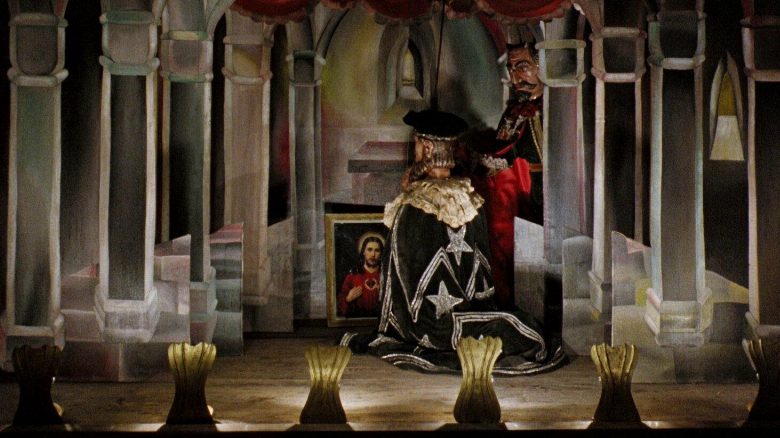
A very free adaptation of Marlowe's "Doctor Faustus", Goethe's "Faust" and various other treatments of the old legend of the man who sold his soul to the devil. A nondescript man is lured by a strange map into a sinister puppet theatre, where he finds himself immersed in an indescribably weird version of the play, blending live actors, clay animation and giant puppets.
Jan Svankmajer remains a towering figure in the landscape of surrealist cinema, and his 1994 masterwork Faust stands as a testament to his singular vision of human greed and existential dread. While modern global audiences are accustomed to the polished, digital gloss of contemporary animation, this film offers a visceral, tactile experience that feels entirely alien yet deeply human. By interweaving the classic literary tale of a scholar trading his morality for forbidden knowledge with the grimy, claustrophobic streets of Prague, the film transforms a familiar myth into a labyrinthine nightmare. It is a bold departure from conventional storytelling, utilizing a blend of live action, elaborate puppetry, and stop motion that forces the viewer to question the boundary between the performer and the puppet.
The film occupies a unique space in European avant-garde cinema, often drawing comparisons to the dark, folk-horror sensibilities found in some of the more experimental corners of world cinema. For fans of Indian independent cinema who appreciate directors who prioritize atmosphere and metaphor over linear plot progression, this film serves as a fascinating study in visual language. It is not a casual watch but rather an immersive descent into a world where the devil is not a singular entity, but a pervasive force hidden within the machinery of daily life. The production design is relentlessly oppressive, creating an environment that feels as though it is decaying in real time, which provides a stark contrast to the clean lines and bright colors that dominate most mainstream animation today.
Watching this iteration of the Faust legend is an exercise in discomfort and intellectual curiosity. It appeals most to those who seek out films that challenge the traditional role of animation, treating the medium as a vehicle for psychological exploration rather than mere fantasy entertainment. Because it relies heavily on non-verbal cues and the uncanny nature of its handcrafted puppets, it transcends language barriers, making it a compelling choice for cinephiles around the world. Svankmajer succeeds in stripping away the romanticism often associated with the legend, leaving behind a raw, grotesque, and profoundly unsettling portrait of a man who discovers that the price of infinite power is the complete erosion of his own identity. It remains a definitive entry for anyone interested in the darker, more cerebral side of artistic animation.