Indiana Jones and the Temple of Doom(1984)
“If adventure has a name... it must be Indiana Jones.”
About Indiana Jones and the Temple of Doom
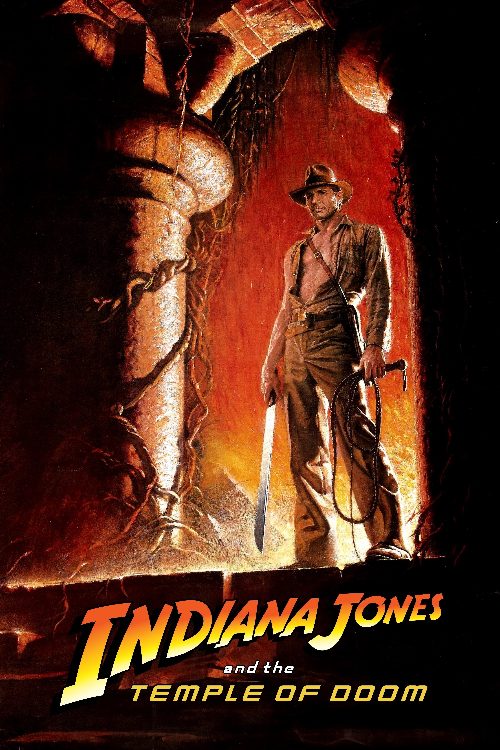
After arriving in India, Indiana Jones is asked by a desperate village to find a mystical stone. He agrees – and stumbles upon a secret cult plotting a terrible plan in the catacombs of an ancient palace.
Few cinematic icons have navigated the complexities of international adventure quite like the fedora-wearing archaeologist who defined the pulse-pounding escapades of the mid-eighties. In this second installment of the franchise, the narrative shifts toward the Indian subcontinent, placing our protagonist in a vastly different cultural landscape than the academic halls he typically frequents. While contemporary Indian cinema has since evolved to embrace diverse global genres, watching this classic through a modern lens reveals a fascinating intersection of Hollywood pulp sensibilities and the atmospheric, often stylized, portrayal of foreign locales that characterized blockbuster filmmaking of that era. The inclusion of legendary Indian actor Amrish Puri adds a distinct layer of gravity to the production, as he brings his commanding screen presence to a role that anchors the film’s more fantastical elements.
The story kicks off when a remote rural community turns to the traveler for assistance in reclaiming a sacred relic, a mission that rapidly spirals into a subterranean confrontation with a shadowy organization. Unlike many action films that rely purely on physical brawls, this entry thrives on a sense of dread and dark mystery, moving away from the sun-drenched tomb raiding of its predecessor into the claustrophobic depths of a hidden palace. For viewers who appreciate high-stakes choreography and a relentless pace, the film remains a masterclass in tension, bolstered by the unmistakable charisma of Harrison Ford. It serves as a time capsule of a period when practical effects and elaborate set designs were the primary tools used to transport audiences to unknown, perilous worlds.
This adventure is particularly recommended for cinephiles who track the evolution of global representation in mainstream media, as it highlights how Western directors interpreted Eastern mythology during the eighties. It stands as a pivotal moment in the trajectory of the lead performer, cementing his status as a leading man capable of balancing dry wit with genuine vulnerability. Even decades later, the film maintains a peculiar, dark energy that distinguishes it from the more lighthearted installments in the series. Whether one is a long-time fan of archeological thrillers or simply curious about the historical footprint of such massive Hollywood projects in international contexts, the film remains a compelling study in atmosphere and spectacle. It remains an essential watch for those interested in the history of action cinema and the enduring legacy of one of the most recognizable characters in film history.
Cast(44)












Crew
Director
Screenplay
Original Music Composer
Casting
Sound Designer
Director of Photography
Rigging Gaffer
Location Manager
Visual Effects
Similar Films