
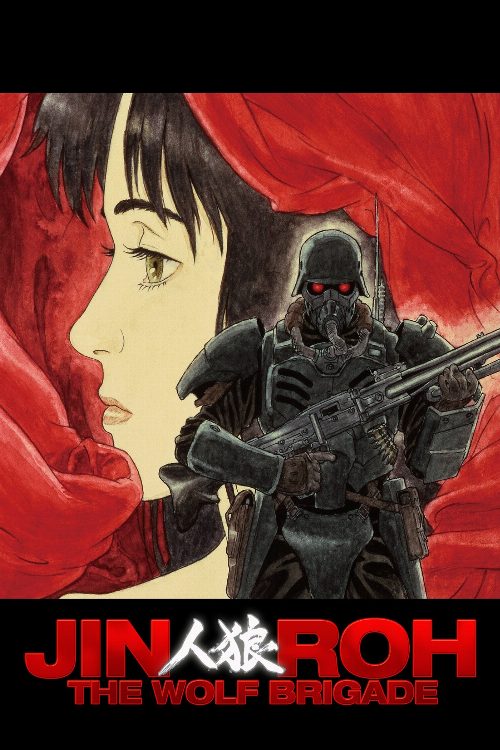
Jin-Roh: The Wolf Brigade(1999)
About Jin-Roh: The Wolf Brigade
A member of an elite paramilitary counter-terrorism unit becomes traumatized after witnessing the suicide bombing of a young girl and is forced to undergo retraining. However, unbeknownst to him, he becomes a key player in a dispute between rival police divisions, as he finds himself increasingly involved with the sister of the girl he saw die.
The shadow of a gas mask and the cold weight of heavy armor define the haunting visual language of Jin-Roh: The Wolf Brigade, a masterpiece of late nineties Japanese animation that remains a touchstone for gritty, adult-oriented storytelling. Directed by Hiroyuki Okiura and written by the legendary Mamoru Oshii, this film occupies a unique space between political thriller and melancholic character study. Unlike the high-octane spectacle often associated with anime, this feature favors a slow-burning intensity that explores the psychological erosion of a soldier caught in a post-war landscape. For fans of Indian cinema who appreciate the layered narratives found in complex political dramas or the stark, atmospheric tension of recent neo-noir thrillers, this film offers a masterclass in mood and thematic depth.
Set in an alternate version of Tokyo where history has veered into a fractured, authoritarian reality, the story follows a member of an elite special police unit who experiences a profound existential crisis. After failing to prevent a tragic explosion, he finds his life inextricably linked to a young woman who shares a connection with the victim. This intersection of personal grief and institutional conspiracy creates a suffocating atmosphere that feels remarkably grounded despite its science fiction premise. The film eschews typical genre tropes, opting instead for a somber look at how individuals are consumed by the machinery of the state. Its animation style is famously meticulous, capturing the tactile reality of heavy weaponry and rain-slicked city streets with a precision that makes the human vulnerability of its protagonist even more striking.
This production is essential viewing for those who value cinema that challenges the audience rather than providing easy answers. It is not a film defined by explosive action, but rather by the silent, agonizing decisions made behind closed doors and in the quiet corners of a city under siege. The narrative functions as a dark fairy tale, weaving in allegorical motifs that ask difficult questions about duty, redemption, and the impossibility of escaping one's true nature. While the global film landscape has shifted significantly since 1999, the stark, uncompromising vision of this project continues to influence contemporary directors who seek to blend genre storytelling with profound societal commentary. It is a haunting exploration of what happens when a person is turned into a predator by a society that demands nothing less than total obedience.
Cast(10)