About Julie Keeps Quiet
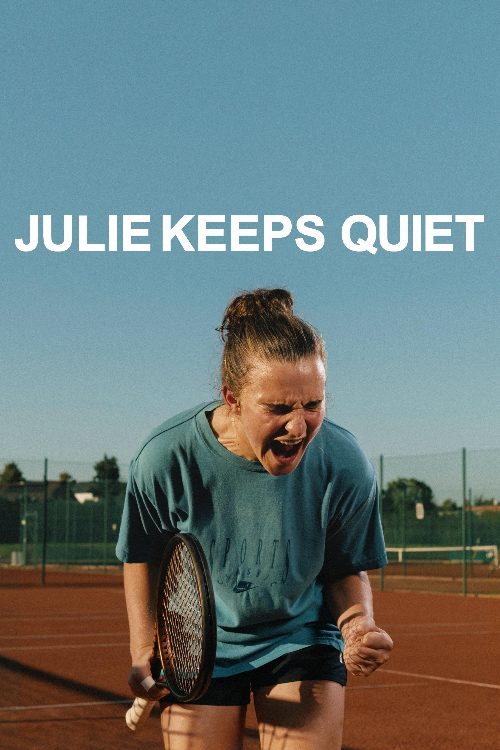
As the star player at an elite tennis academy, Julie’s life revolves around the game she loves. When her coach falls under investigation and is suddenly suspended, all of the club’s players are encouraged to speak up. But Julie decides to keep quiet...
The heavy silence hanging over the tennis courts in Julie Keeps Quiet serves as a chilling testament to the power of institutional loyalty and the complex psychological weight placed upon young athletes. While the global cinematic landscape is currently saturated with sports dramas that emphasize the thrill of victory or the underdog spirit, this Dutch-language production pivots sharply toward the internal fractures of a competitive environment. Instead of focusing on the mechanics of the game, the narrative dissects the suffocating pressure felt by a promising tennis prodigy who finds herself at the center of a moral crisis when her mentor is abruptly removed from his position. It is a stark study of silence as a defense mechanism, exploring how the pursuit of excellence can create a veil that hides systemic rot from those most affected by it.
This film feels particularly relevant in the current era of international cinema, where stories centered on the nuances of trauma and the fragility of adolescence are finding significant traction in the European festival circuit. Much like recent explorations of power dynamics in elite circles, the movie avoids the easy path of a conventional whistleblower thriller. Instead, it prioritizes the claustrophobic atmosphere of the tennis academy, portraying it as a closed ecosystem where the hierarchy is fragile and the stakes are impossibly high. Tessa Van den Broeck delivers a performance defined by restraint, conveying the internal conflict of a girl who realizes that speaking out might dismantle the only identity she has ever known. It is this refusal to offer a clear-cut heroic arc that makes the character study so compelling for audiences who prefer cerebral, character-driven dramas over predictable genre tropes.
Viewers who appreciate the measured tension of European auteur cinema will find much to admire in this project, which treats the sport of tennis not as a spectacle but as a metaphor for control and discipline. The direction opts for a clinical, observational style that mirrors the protagonist’s own attempt to distance herself from the unfolding scandal. By focusing on the unspoken tension between the players and the administration, the film invites the audience to consider the cost of silence in high-pressure environments. It is a sophisticated addition to the contemporary drama genre, specifically tailored for those who value films that prioritize psychological depth and societal critique over action. As the story progresses, it challenges the viewer to question whether the pursuit of a dream is worth the sacrifice of one’s own conscience, ensuring that the film leaves a lingering impact long after the final credits roll.
Cast(23)