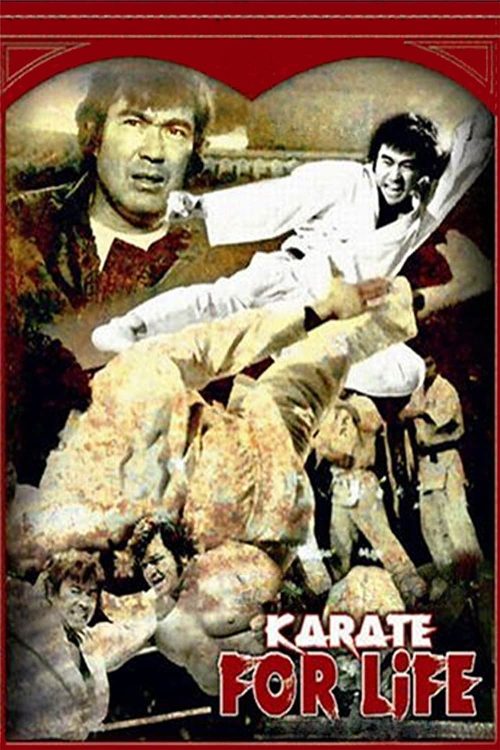
About Karate for Life
The last of the Masutatsu Oyama trilogy. Oyama takes a job as a professional wrestler in Okinawa, but when he discovers that he is expected to take a dive, he quits in disgust. However, when a friend finds herself in desperate need of medical supplies, Oyama steps back in the ring to raise the money—but will he be able to follow the script this time?
Few martial arts icons possess the raw, kinetic intensity that Sonny Chiba brought to the screen during the golden age of Japanese action cinema. As the final installment in the trilogy centering on the legendary martial artist Masutatsu Oyama, Karate for Life stands as a testament to a bygone era of visceral, no-frills filmmaking. While modern audiences might be accustomed to the polished, CGI-heavy spectacles dominating current global box offices, this 1977 release offers a gritty, grounded alternative that prioritizes the physical prowess of its leads over digital artifice. The film captures a pivotal moment in the evolution of the genre, bridging the gap between traditional brawler narratives and the more character-driven dramas that began to emerge in the late seventies.
The narrative arc follows a familiar yet compelling path, placing its protagonist in the morally compromised world of professional wrestling. By positioning the hero against a backdrop of staged outcomes and corruption in Okinawa, director Kazuhiko Yamaguchi elevates the stakes beyond simple combat. It is this tension between personal integrity and the demands of a dishonest industry that gives the film its enduring resonance. For fans of Indian cinema who appreciate the high-octane bravado seen in classics of the Telugu and Tamil industries, this movie offers a similar brand of masculine resilience and moral absolutism. The protagonist is not merely a fighter but a man forced to navigate the blurred lines between performance and reality to serve a greater cause.
Viewers who enjoy the stripped-down, punch-first aesthetic of older grindhouse cinema will find much to admire here. It is an essential watch for those interested in the historical lineage of combat films, particularly for how it contrasts with the more stylized, choreographically complex works that followed. Chiba’s performance remains the anchor, projecting a sense of gravity and power that feels entirely authentic. Whether you are a dedicated student of international film history or simply a fan of classic action, this chapter in the Oyama saga remains a potent example of how Japanese cinema once utilized the screen to explore the intersection of discipline, honor, and the harsh realities of the fighting world. Its place in the pantheon of seventies action remains secure, offering a lean and mean cinematic experience that refuses to compromise its rugged identity.
Cast(1)
Crew
Producer
Comic Book
Screenplay
Cinematography
Director
Production Design
Music
Editor
Similar Films