About Parta ola
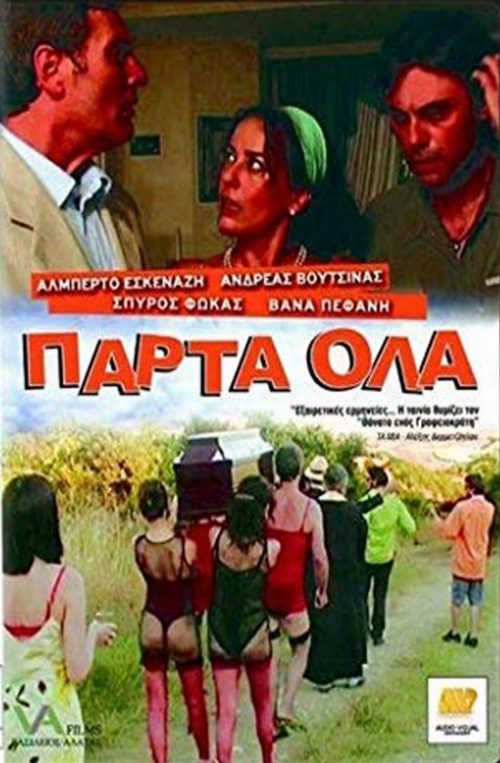
A wealthy, eccentric old man leaves his friend, a notary, a strange will. He wants to be buried with a view of the sea, gypsies playing music, and his coffin carried by four girls dressed like Moulin Rouge dancers. Otherwise, his enormous fortune will be inherited by the church for the benefit of illegitimate and extramarital children. His son, a former progressive and now a businessman, is unable to revoke the will because the church will be the plaintiff. So all the members of the family will try overnight to find a way to fulfill the terms of the will in order to get the money. But the road will not be as easy as they imagined...
Few cinematic narratives capture the chaotic intersection of greed and absurdity quite like the 2003 Greek comedy Parta ola. Directed by Vasilis Boudouris, the film dives headfirst into the high-stakes scramble that ensues when a departed patriarch leaves behind a testament designed to humiliate his heirs. While Indian cinema often explores the trope of the dysfunctional family fighting over ancestral property through heavy-handed melodrama or slapstick humor, this Greek production treats the premise with a sharper, more sardonic edge. The central conflict forces a buttoned-up businessman to abandon his professional decorum and orchestrate a bizarre funeral procession, creating a satirical look at how traditional societal values clash with the eccentric whims of the wealthy.
The film stands out for its willingness to embrace the grotesque, particularly in its specific requirements for the funeral rites which involve a troupe of dancers and specific musical accompaniment. For audiences who appreciate the frantic, multi-character ensemble pieces common in Malayalam or Tamil black comedies, this feature offers a familiar yet distinctly Mediterranean flavor. It is a story about the performative nature of grief and the lengths to which people will go when a massive inheritance hangs in the balance. The narrative momentum relies heavily on the ensemble cast, including veteran performers like Andreas Voutsinas and Spiros Focas, whose ability to ground such outlandish circumstances in recognizable human desperation is the engine driving the plot forward.
Viewers who enjoy character-driven satires that poke fun at institutional power, particularly the complex relationship between family legacies and the church, will find plenty to admire here. By positioning the church as the primary beneficiary waiting in the wings, the film adds a layer of social commentary that feels biting and cynical. It is essentially a race against time, where the protagonists must shed their pretenses to satisfy the late patriarch's final, flamboyant requests. While it lacks the high-octane action sequences often prioritized in contemporary pan-Indian blockbusters, Parta ola succeeds by focusing on the friction of human personality. It serves as a reminder that regardless of the linguistic or regional background, the universal language of family dysfunction and the corrupting power of sudden wealth remains a rich vein for comedic exploration. Anyone looking for a film that values witty setups over grand spectacle will find this a refreshing addition to their watchlist.