
About Suntan
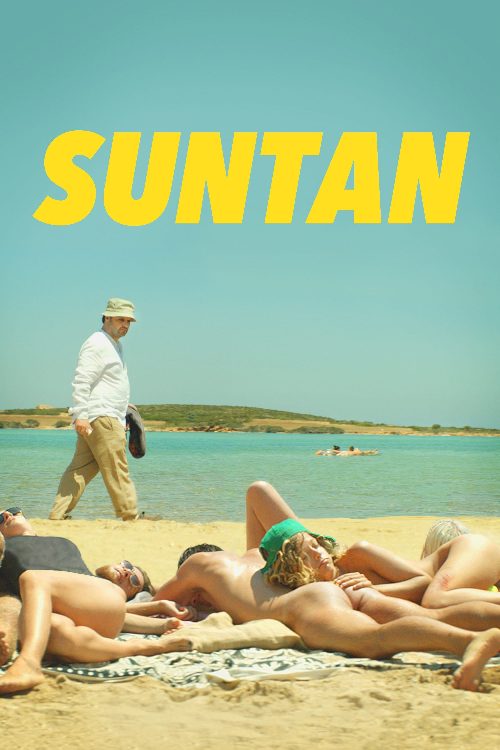
Kostis is a 40-year-old doctor that finds himself in the small island of Antiparos, in order to take over the local clinic. His whole life and routine will turn upside down when he meets an international group of young and beautiful tourists and he falls in love with Anna, a 19-year-old goddess.
The sweltering heat of the Greek summer acts as a suffocating backdrop in Suntan, a film that dissects the midlife crisis with a clinical, almost uncomfortable precision. When Kostis, a middle-aged physician, relocates to the idyllic shores of Antiparos to manage the local medical facility, he enters a world that feels light-years away from his past. Rather than finding the quiet stability typically associated with a rural practice, he discovers an insatiable desire to reclaim his lost youth. This is not a standard vacation drama about finding oneself in paradise; instead, it is a haunting psychological exploration of obsession and the heavy cost of trying to bridge the gap between two entirely different generations.
For audiences familiar with the nuance of modern Greek cinema, this film serves as a masterclass in building tension through atmosphere. Director Argyris Papadimitriou crafts a narrative that feels increasingly claustrophobic despite the expansive, sun-drenched landscapes. The performance by Makis Papadimitriou is particularly striking, as he portrays a man whose professional authority slowly dissolves into a desperate, pathetic yearning. This mirrors the trajectory seen in certain dark comedies from the Indian independent circuit, where the protagonist's internal decay is masked by the outward vibrancy of their environment. Viewers who appreciate character-driven narratives that prioritize psychological realism over traditional pacing will find the descent of this lead character both fascinating and deeply unsettling.
Suntan is essentially a cautionary tale about the dangers of projecting one's fantasies onto others. By focusing on the stark contrast between the local life of an islander and the hedonistic, transient nature of the tourist crowd, the film forces the audience to confront the absurdity of the main character's choices. It is a bold stylistic departure from more sentimental dramas, refusing to offer the viewer a comfortable resolution or a moral high ground. Those who enjoy films that challenge their comfort zone and offer a raw look at human frailty will likely find this a compelling watch. It stands as a testament to the power of regional filmmaking to tell stories that feel universally relatable, regardless of the specific geography involved.
Cast(17)