
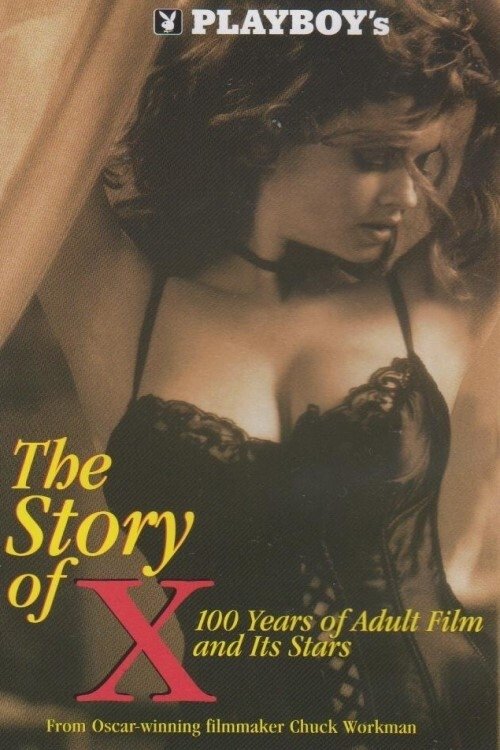
Playboy: The Story of X(1998)
About Playboy: The Story of X
The Story Of X takes you to the earliest days of adult films when men peddled stag reels and projectors out of the trunks of their cars, then through the movie house years to the arrival of the home video business, and now the Internet. Meet the men behind the camera, such as "King of Sexploitation" Dave Friedman and the preeminent breast man Russ Meyer. Considered pariahs at the time, they're now hailed as pioneers in the fight against censorship. The Story of X visits the 60s when women's rights, not nudity, became the issue and recounts porn's arrival in Hollywood, led by director Bernardo Bertolucci's Last Tango In Paris. In the 70s, several groundbreaking films, including Behind The Green Door featuring Marilyn Chambers and Deep Throat featuring Linda Lovelace, took the genre to a new level.
Tracing the evolution of adult entertainment requires a candid look at the shadows of the cinematic landscape, a task undertaken with remarkable transparency in the 1998 documentary The Story of X. While modern Indian cinema frequently navigates the complexities of censorship and moral policing, this film provides a vital historical perspective on how the global industry moved from illicit trunk-based distribution to the mainstream digital age. By focusing on the figures who operated in the periphery of Hollywood, the documentary frames the history of erotic film not merely as a series of taboo productions, but as a long-standing battleground for free expression and artistic boundary-pushing. It captures a specific era where the line between underground exploitation and avant-garde cinema blurred, particularly during the transition from the mid-century stag reel era to the cultural shifts of the seventies.
The documentary stands out by highlighting the tension between the industry outcasts and the societal norms of their time. For viewers interested in film history, the production offers a fascinating study of how technical advancements, such as home video, fundamentally altered consumption habits, a shift that mirrors the current disruption caused by streaming platforms in the Telugu, Tamil, and Hindi film industries. By including perspectives from influential directors and iconic performers, the film elevates its subject matter beyond mere sensationalism, positioning these individuals as unlikely pioneers who challenged traditional institutional control. It serves as a comprehensive primer for anyone curious about the mechanics of a genre that has historically been ignored by traditional film scholarship yet exerted a massive influence on aesthetic trends and distribution models worldwide.
Audiences who appreciate deep-dive retrospectives will find the narrative structure particularly compelling, as it contextualizes the growth of adult cinema alongside broader socio-political movements like the fight for women's rights and the changing definition of obscenity in Western culture. The film does not shy away from the controversial nature of its subjects, nor does it offer a sanitized version of the past, making it a gritty, essential watch for those who view cinema as a reflection of societal evolution. By examining the trajectory of these filmmakers, the documentary invites a broader conversation about how art is categorized and why certain creative pursuits remain confined to the margins for decades before being reevaluated. It is a bold, unflinching piece of historical record that remains relevant for anyone seeking to understand the commercial and cultural pressures that have shaped the history of the moving image.
Cast(25)