
About Rebels of the Neon God
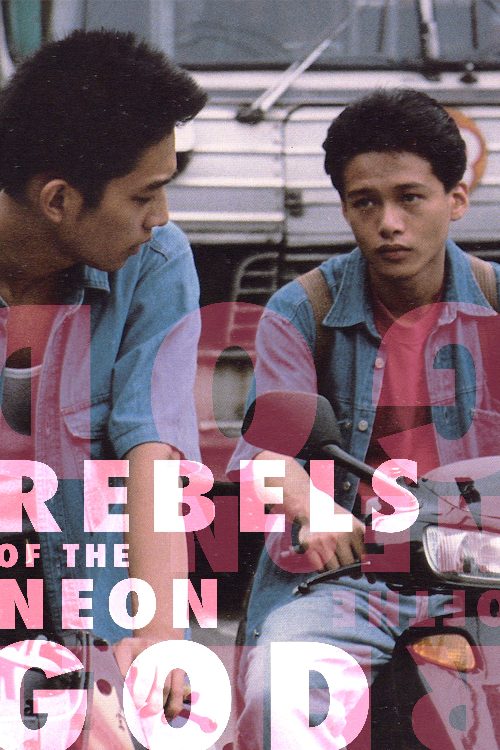
Within the urban gloom of Taipei, four youths face alienation, loneliness, and moments of existential crisis amidst a series of minor crimes.
Tsai Ming-liang arrived on the international stage with a vision of Taipei that felt less like a bustling metropolis and more like a decaying psychological maze where youth drift without purpose. Rebels of the Neon God functions as a foundational text for the Taiwanese New Wave, capturing a specific brand of urban malaise that resonates just as strongly with modern audiences who find themselves lost in the digital sprawl. While many films of the era focused on historical trauma or political shifts, this narrative chooses to telescope inward, observing the microscopic tensions of four individuals whose lives intersect through petty delinquency and unrequited longing. It is a striking departure from the high-octane crime dramas produced in other parts of Asia, opting instead for a hypnotic, slow-burn atmosphere that prioritizes internal state over external action.
The film is essential viewing for anyone interested in the evolution of independent cinema and the way filmmakers translate the crushing weight of loneliness into visual poetry. Lee Kang-Sheng, who would go on to become the director's lifelong muse, delivers a performance defined by restraint and brooding intensity, perfectly embodying the aimless energy of the generation depicted on screen. The cinematography favors long, static takes that force the viewer to sit with the characters in their cramped apartments and neon-lit arcades, effectively turning the city itself into a silent antagonist. This aesthetic choice is a hallmark of the director's career, and watching this early work offers a fascinating glimpse into the genesis of a style that would later influence arthouse directors across the globe, including those currently reshaping the landscape of Indian regional cinema through similarly contemplative, character-driven storytelling.
Fans of moody, atmospheric dramas will find much to admire in this exploration of isolation. It avoids the tired tropes of typical crime films, ignoring grand heists or moral retribution in favor of genuine, messy human connection. The film captures a sense of restlessness that feels universal, bridging the gap between the 1990s Taiwanese experience and the contemporary struggle for identity in an increasingly disconnected world. Whether you are a scholar of international film history or simply a viewer who appreciates narratives that favor mood and subtext over exposition, this piece remains a haunting, vital experience. It stands as a testament to the idea that the most profound stories are often hidden in the quietest corners of a city, waiting for an observant eye to bring them into the light.