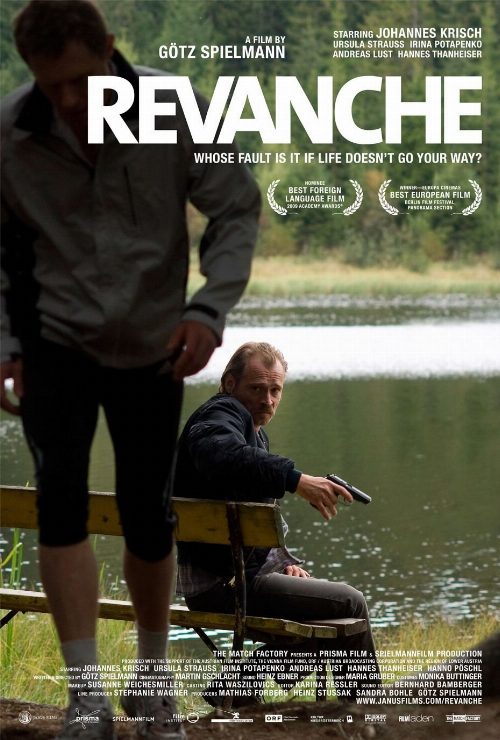
About Revanche
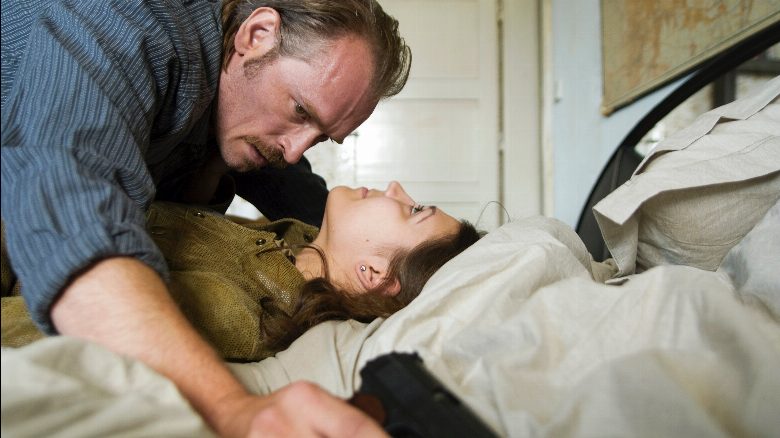
Alex, an ex-con working as muscle in a Vienna brothel, dreams of escaping with his girlfriend Tamara, who also works there. Their attempt to break free sets off a chain of events that links their fate with a rural police officer and his troubled marriage. As their lives intersect, a quiet struggle unfolds between guilt, grief, and the desire for redemption.
Austrian cinema often possesses a distinctive, brooding intensity that strips away the glamour of crime to reveal the raw, human consequences underneath, and Revanche stands as a masterclass in this restrained aesthetic. Director Gotz Spielmann crafts a narrative that feels less like a typical genre piece and more like a meditation on the accidental collisions of desperate lives. While Indian audiences are accustomed to high-octane thrillers where vengeance is often a loud, cathartic spectacle, this film offers a starkly different experience. It focuses on the internal fractures of its characters, trading explosive action for a slow-burning tension that builds through silence and the weight of moral ambiguity. The story centers on Alex, an individual attempting to navigate his way out of the shadows of a former criminal life, and his quiet desperation to forge a new path with Tamara. Their aspirations are quickly dismantled by a series of events that draw them into the orbit of a rural law enforcement officer, creating a psychological tug-of-war that transcends simple notions of hero and villain.
The brilliance of the film lies in how it juxtaposes the cold, clinical atmosphere of urban exploitation with the stark, haunting beauty of the Austrian countryside. For viewers who appreciate the intricate character studies found in contemporary Malayalam or Tamil neo-noir, Revanche will feel like a familiar yet sophisticated relative. It avoids the temptation of easy answers, choosing instead to explore the murky intersection of grief and the thirst for retribution. Johannes Krisch delivers a performance of remarkable subtlety, grounding the film in a reality that feels both fragile and inevitable. The pacing is deliberate, demanding patience from the audience, but it rewards that focus with a profound sense of emotional resonance.
This is an essential watch for those who prefer cinema that lingers in the mind long after the credits roll. It is positioned as a character-driven thriller, making it perfect for cinephiles who enjoy films that challenge their perspective on morality. By stripping away the artifice of the thriller genre, the narrative exposes the universal vulnerability of people caught in the machinery of fate. As the film progresses, the boundaries between the hunter and the hunted blur, leaving the spectator to grapple with the same ethical dilemmas that haunt the protagonists. It stands as a testament to the power of minimalist storytelling, proving that the most impactful conflicts are often the ones fought behind closed doors and within the quietest corners of the human heart.
Cast(14)