About Sans pitié
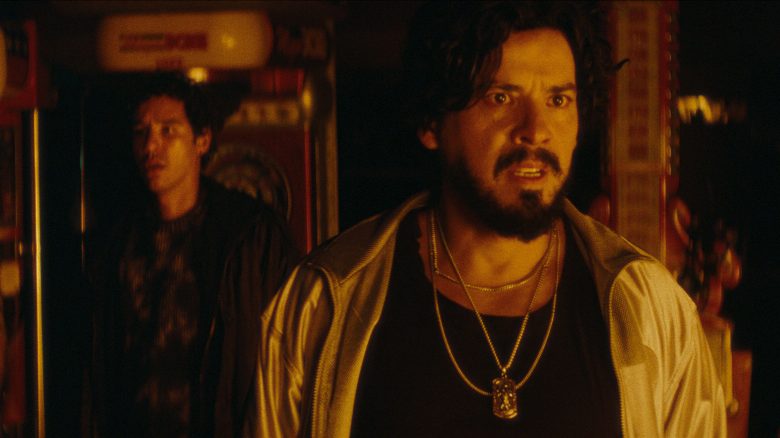
Maria raises her two sons, Ryan and Dario, on her own. The three of them run the shooting stand at a small traveling fair. After a motorcycle ride with his older brother, Dario disappears and remains missing. It’s only the next day that he reappears—injured and completely silent... Twenty years later, after their mother’s death, the two brothers reunite. Dario has rebuilt his life in Canada, while Ryan stayed behind in Ferris Wheel, surviving off the stand and small-time hustles. Dario rediscovers this forgotten world of the fairground and the family it harbors. But one night, among Ryan’s circle, he unexpectedly comes face to face with one of his former captors. From that moment on, the two brothers must grapple—with vengeance on one side, and forgiveness on the other...
Few narratives possess the raw, unsettling magnetism of a childhood trauma that refuses to be buried, a theme that Sans pitie explores with cold, unflinching precision. Set against the nomadic and often gritty backdrop of a traveling fairground, the film trades the usual whimsy associated with carnival life for a landscape defined by isolation and long-held secrets. The story centers on two brothers, Ryan and Dario, whose lives were irrevocably fractured two decades prior when a simple joyride spiraled into a nightmare of abduction and silence. While the French production operates far from the vibrant color palettes of Tollywood or the stylistic experimentation of the Malayalam industry, it shares a common thread with global cinema’s obsession with the psychological toll of past burdens. The return of a long-lost sibling to a stagnant hometown serves as the perfect catalyst for a narrative collision between the urge for violent retribution and the weary pursuit of peace.
Jonathan Turnbull and Camille Pistone anchor the film with performances that prioritize internal struggle over grand gestures, effectively mirroring the quiet tension of a thriller built on memory rather than action. The director leans into the atmosphere of a world left behind, where the dusty remains of a family business become a pressure cooker for unresolved grief. This is not a film designed for those seeking easy answers or heroic arcs; it is a somber character study that asks how much of a person remains when their formative years are stolen by cruelty. For audiences who appreciate the slow-burn intensity found in modern noir or the brooding character dramas that have become a hallmark of contemporary European storytelling, this movie offers a masterclass in building dread through silence and subtext.
The contrast between the two leads is particularly sharp, representing the divergent paths of those who flee their trauma and those who are consumed by it. As Dario re-enters the orbit of the fairground, the audience is forced to confront the dark reality that some wounds never fully close, they simply wait for the right moment to fester. Sans pitie manages to elevate the classic revenge premise by anchoring it in the specific, claustrophobic environment of a community that operates on the fringes of society. It is a compelling watch for viewers who enjoy films that challenge their moral compass, forcing them to weigh the cost of justice against the fragility of human connection. By stripping away the spectacle, the film leaves us with the stark, uncomfortable truth that for some, the past is not just a memory, but an active, breathing threat that never stops hunting.