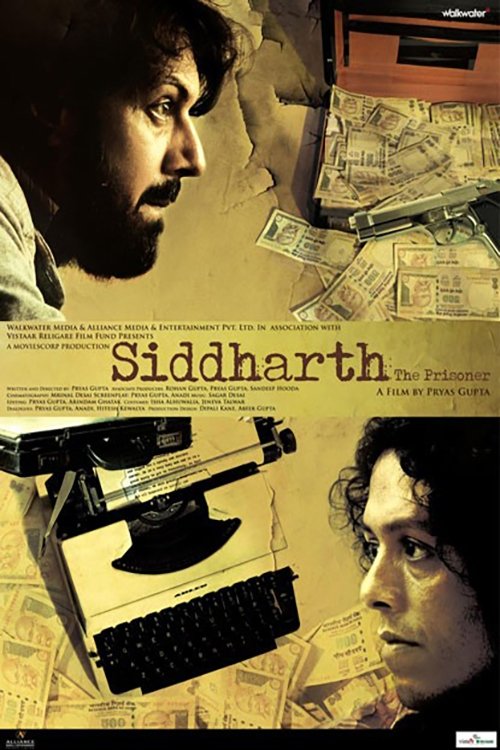
About Siddharth: The Prisoner
Siddharth Roy gets discharged from jail, and with his lawyer's assistance, returns to his rental flat in Mumbai and is asked to consider a divorce settlement from his wife, Maya. While in his flat he finalizes a manuscript titled 'The Prisoner', and then attends the Om Shree Internet Cafe to email publisher, Tim Wright. When he returns home he finds that the briefcase he got from the Internet café is not his, and contains Rs.20 Lakhs in cash. He decides to keep the cash, and returns to the café to see if he can locate his briefcase in order to get his book published. He does not do so - but is unaware that the briefcase belongs to a gangster, Atul Bhai, who has already assigned two armed men, Amin Bhai, and Aseem, to get it back, while the café attendant, Mohan, who had Googled Siddharth, is actively engaged in locating him.
The landscape of Hindi independent cinema in the late 2000s often favored gritty urban realism, and Siddharth The Prisoner emerges as a compelling artifact of that era. By focusing on a protagonist who finds himself at a precarious crossroads between past mistakes and an uncertain future, the film taps into the classic noir trope of the accidental windfall. When a former convict inadvertently switches briefcases at a local internet cafe, the narrative shifts from a somber domestic drama about divorce and professional failure into a high-stakes cat-and-mouse game. This sudden transition from the quiet life of an aspiring author to a target of shadowy criminal elements provides a distinct tension that differentiates the film from standard Bollywood crime thrillers of the time.
The film serves as a fascinating time capsule of Mumbai’s shifting digital landscape, where the local internet cafe served as the primary bridge between human connection and global opportunity. Rajat Kapoor, known for his nuanced performances in auteur-driven cinema, brings a specific gravity to this project that elevates the material beyond a simple crime caper. His presence suggests a focus on character psychology rather than hollow spectacle, grounding the story in the protagonist’s desperate need for redemption through his writing. Because the narrative balances the mundane struggles of a failed marriage with the adrenaline of evading gangsters, the pacing feels uniquely tethered to the protagonist’s internal state of anxiety and confusion.
Viewers who appreciate slow-burn thrillers that prioritize atmospheric storytelling over explosive action will find much to admire here. It is an ideal watch for those interested in the evolution of Hindi regional thrillers that moved away from mainstream formulas to explore existential themes. The plot relies heavily on the irony of a man searching for a path to publish his life story, only to have his life derailed by a stroke of illicit fortune. For fans of performance-led dramas who enjoy seeing an ordinary individual navigate the treacherous underworld of a metropolis, this film acts as a sobering look at how quickly an isolated life can unravel. It remains a notable entry for anyone cataloging the shift toward more experimental and grounded narratives within the Hindi film industry during the late 2000s.