
About The Flat
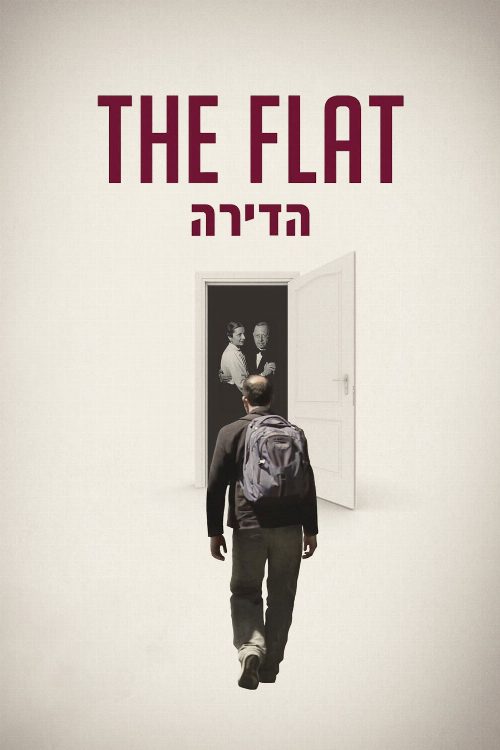
The flat on the third floor of a Bauhaus building in Tel Aviv was where my grandparents lived since they immigrated to Palestine in the 1930s. Were it not for the view from the windows, one might have thought that the flat was in Berlin. When my grandmother passed away at the age of 98 we were called to the flat to clear out what was left. Objects, pictures, letters and documents awaited us, revealing traces of a troubled and unknown past. The film begins with the emptying out of a flat and develops into a riveting adventure, involving unexpected national interests, a friendship that crosses enemy lines, and deeply repressed family emotions. And even reveals some secrets that should have probably remained untold...
Few documentaries manage to turn the mundane task of clearing out an elderly relative's estate into a profound investigation of historical burden and generational silence. Arnon Goldfinger offers a masterclass in investigative introspection with The Flat, a film that begins as a personal chronicle of family history and slowly morphs into a unsettling journey through the shadows of the twentieth century. While Indian audiences are accustomed to narratives that grapple with the weight of colonial legacies and the displacement of Partition, this film shifts the lens toward the complex, often uncomfortable layers of European migration to the Middle East. It serves as a stark reminder that the artifacts we inherit from our ancestors are rarely just inanimate objects; they are often silent witnesses to complicated political alliances and moral compromises that have been buried under decades of routine.
The narrative momentum picks up when Goldfinger begins to uncover remnants of a life that feels jarringly out of place in its Tel Aviv setting. By juxtaposing the reality of a modern Israeli home with the artifacts of a German upbringing, the film highlights a dissonance that is both intimate and global. Viewers who appreciate the slow burn of investigative documentaries, where every discovered document or photograph acts as a piece of a larger, more menacing puzzle, will find this work particularly compelling. It is a film for those who are fascinated by the human tendency to curate the past, selectively remembering the parts that allow us to sleep at night while suppressing the ghosts that haunt our heritage.
Goldfinger does not merely look back; he forces a confrontation with the uncomfortable truth that some secrets are not meant to be uncovered, yet demand to be addressed nonetheless. By stepping into his own history, the director avoids the trap of sentimentality, instead opting for a clinical, almost detective-like approach to his family saga. The film feels remarkably relevant today, especially as cinema continues to explore how the trauma of the past dictates the behavior of the present. For those who enjoy films that challenge their perspective on national identity and personal loyalty, this documentary stands as a essential viewing experience. It strips away the comfort of family lore to reveal the complex, often contradictory reality of those who navigated the turbulent waters of the mid-twentieth century, leaving the audience to ponder the heavy cost of the truths we choose to bury.