The Sword of Doom(1966)
About The Sword of Doom
Ryunosuke, a gifted swordsman plying his trade during the turbulent final days of Shogunate rule, has no moral code and kills without remorse. It’s a way of life that leads to madness.
Few cinematic portraits of the samurai era are as chillingly nihilistic as the one painted in the 1966 classic The Sword of Doom. While many period dramas from the Japanese golden age romanticize the bushido code or the honor of the warrior, director Kihachi Okamoto takes a starkly different path by centering his narrative on a protagonist devoid of empathy. Ryunosuke is not a hero seeking redemption or a villain with a grand scheme; he is a vessel for pure, unadulterated violence. This focus on a sociopathic anti-hero feels remarkably modern, predating the gritty deconstruction of the genre that would become popular in later decades. It serves as a compelling study of how the chaos of a crumbling political system can nurture a monster, stripping away the idealized veneer of the Edo period to reveal a stark, bloody reality.
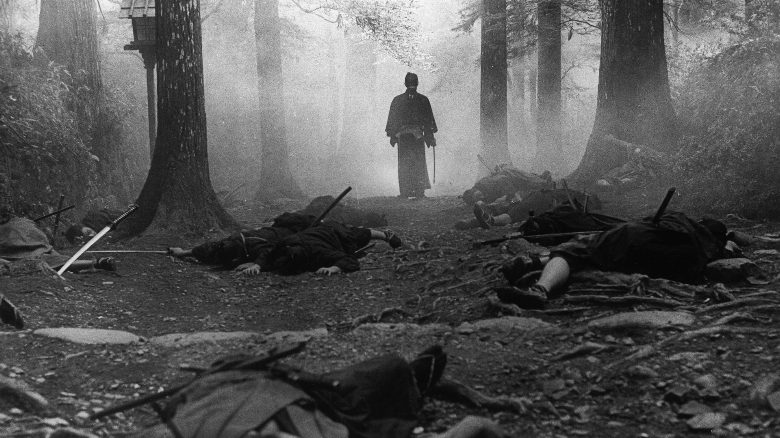
The performance by Tatsuya Nakadai is the gravitational force that holds this unsettling masterpiece together. He portrays the central character with a cold, glassy-eyed intensity that effectively communicates a descent into psychological ruin. For audiences accustomed to the more righteous or conflicted swordsmen found in traditional jidaigeki films, this portrayal offers a jarring, necessary contrast. The film occupies a unique space in international cinema, bridging the gap between the traditional samurai epic and the psychological thriller. Its influence is evident in how it handles the inevitability of violence, making the combat sequences feel less like glorious duels and more like symptoms of a decaying society. The stark black and white cinematography emphasizes the bleakness of the protagonist’s outlook, creating an atmosphere of dread that persists long after the blades are sheathed.
Viewers who appreciate character-driven dramas that refuse to offer easy moral answers will find this film essential viewing. It is particularly recommended for those interested in the evolution of the action genre, as it demonstrates how a film can function as both a technical showcase for swordplay and a profound exploration of human corruption. While it is firmly rooted in the historical context of late Shogunate turmoil, its themes regarding the cyclical nature of aggression and the loss of one's humanity are universal. The Sword of Doom remains a standout entry in the annals of Japanese film history precisely because it dares to look into the abyss of its lead character's soul without blinking. It is a haunting, masterful work that challenges the audience to consider whether true skill with a weapon can ever be separated from the moral vacuum of its user.
Cast(28)