About Vampyr
Allan Gray, a young man fascinated by the supernatural, goes to a small village where he feels a sinister force descending upon him. There, Allan meets an old man who asks him to protect his two daughters, for one of them has been bitten by a vampire.
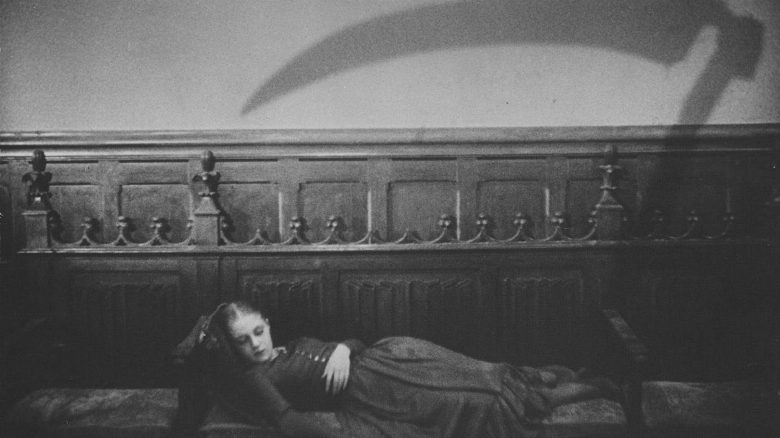
Few films have managed to capture the unsettling quality of a fever dream with the same haunting precision as the 1932 classic Vampyr. Directed by Carl Theodor Dreyer, this masterpiece diverges sharply from the theatrical dramatics often found in early horror cinema, opting instead for an ethereal, almost disjointed atmosphere that feels less like a traditional narrative and more like a descent into a subconscious realm. While modern audiences in the Indian film landscape—accustomed to the high-octane jump scares and supernatural thrills of contemporary horror hits—might find the pacing deliberate, there is an undeniable artistry here that transcends time. It serves as a stark reminder that the most potent fear often arises not from what is explicitly shown, but from the shadows and whispers that linger in the periphery of our vision.
The story follows a wandering scholar whose curiosity draws him into a secluded village choked by a malevolent presence. Upon his arrival, he is thrust into a desperate struggle to safeguard two sisters from a predatory entity that feeds on the vulnerable. In an era where European gothic cinema was finding its voice, Dreyer chose to strip away the bombast, utilizing hazy cinematography and blurred focus to mirror the protagonist’s shifting perception of reality. For viewers who appreciate the psychological tension found in films like the atmospheric thrillers of the Malayalam industry or the slow-burn mysteries of arthouse cinema, Vampyr offers a masterclass in visual storytelling. It avoids the typical tropes of its genre, choosing to prioritize a pervasive sense of dread over crude shocks.
Nicolas de Gunzburg delivers a performance defined by understated bewilderment, grounding the film as the audience surrogate navigating a landscape governed by strange, non-linear logic. This production is essential viewing for cinephiles who look for the roots of modern mystery and those interested in how early filmmakers experimented with light and movement to manipulate audience anxiety. Even decades later, the film maintains a peculiar, hypnotic grip that makes it stand out against the backdrop of more conventional monster movies. It is a haunting, delicate piece of work that invites the viewer to abandon their expectations of structure and simply surrender to the eerie, dreamlike logic that defines this landmark of global cinema.
Cast(10)



Crew
Director of Photography
Art Direction
Screenplay
Special Effects
Sound Designer
Original Music Composer
Set Decoration
Novel
Assistant Director
Similar Films