About Weekend
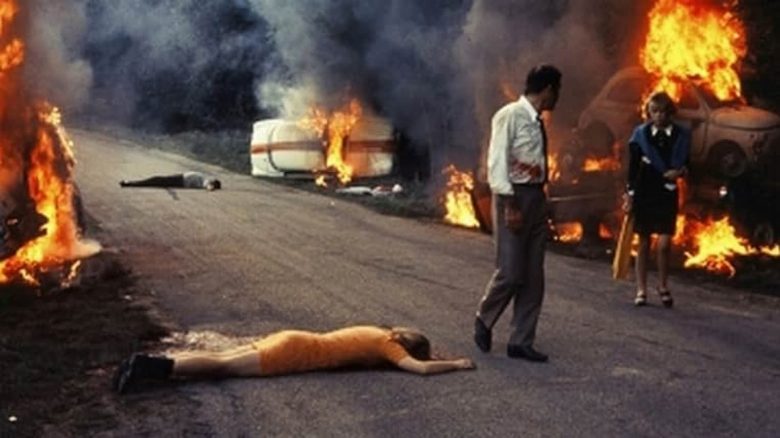
A supposedly idyllic weekend trip to the countryside turns into a never-ending nightmare of traffic jams, revolution, cannibalism and murder as French bourgeois society starts to collapse under the weight of its own consumer preoccupations.
Jean-Luc Godard remains a singular architect of cinematic disruption, and his 1967 masterpiece Weekend serves as perhaps the most visceral indictment of consumerist mania ever committed to celluloid. While contemporary audiences are accustomed to high-concept satires exploring the decay of the middle class, this film functions as a frantic, apocalyptic fever dream that strips away the veneer of normalcy with surgical precision. The narrative trajectory begins as a mundane excursion to the countryside but quickly dissolves into a surreal landscape defined by gridlocked highways, visceral violence, and the utter disintegration of social etiquette. It is a work that thrives on the grotesque, forcing viewers to confront the ugliness inherent in a society obsessed with material status and bourgeois comfort.
Within the broader scope of European cinema, this project stands as a definitive moment where formal experimentation met sociopolitical outrage. Godard uses the frame not merely to tell a story but to dismantle the medium of film itself, employing jarring edits and confrontational imagery to keep the audience in a state of permanent unease. For those familiar with the history of the French New Wave, the film serves as a bridge between the intellectual playfulness of early sixties cinema and the raw, radical militancy that would define the director later in his career. It is not a casual watch for those seeking traditional narrative resolution; rather, it is an essential experience for cinephiles who appreciate bold, transgressive storytelling that challenges the boundaries of what a motion picture can express about the human condition.
The film is particularly striking when viewed through a modern lens, as its critique of consumption feels more prophetic than ever. While many films of the era have aged into relics, this particular work retains a sharp, jagged edge that continues to unsettle. Its portrayal of a civilization caught in a traffic jam of its own making mirrors our current global anxieties about environmental collapse and the hollow nature of modern aspirations. Viewers who enjoy films that prioritize subtext and stylistic defiance over tidy plot developments will find this to be a landmark achievement. It is a cynical, darkly comedic, and ultimately terrifying vision of human excess that demands to be seen by anyone interested in how directors use the power of the lens to hold a mirror up to the moral failings of their own time.
Cast(24)