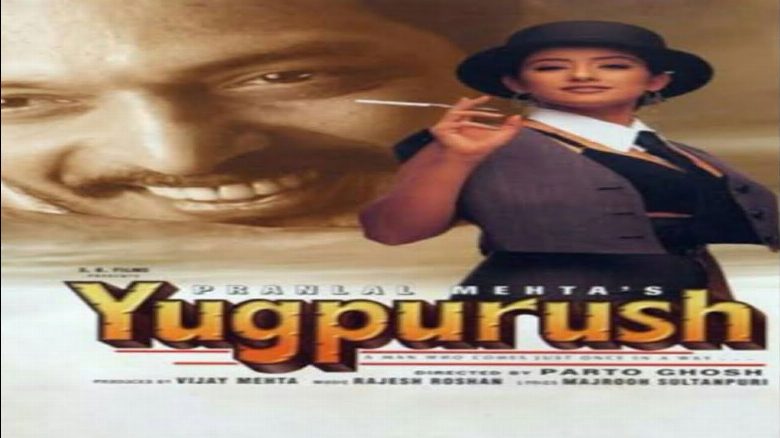

About Yugpurush
Anirudh is a mentally ill man who falls in love with Sunita. Her guardian Mohan disapproves.
Partho Ghosh crafted a poignant exploration of societal perceptions and human connection with the 1998 drama Yugpurush, a film that remains a notable entry in the landscape of late nineties Hindi cinema. By focusing on the delicate relationship between a man grappling with mental health challenges and a woman seeking to navigate her own existence, the narrative moves away from the high-octane action tropes that often dominated the industry during that era. Instead, the film leans into character-driven storytelling, utilizing the intense screen presence of Nana Patekar to anchor a story that balances emotional vulnerability with the harsh realities of public judgment. The inclusion of a protective guardian figure adds a layer of conflict that mirrors the period's preoccupation with traditional familial barriers, forcing the audience to weigh the validity of societal norms against the authenticity of personal bonds.
The film distinguishes itself by attempting to humanize characters who are frequently relegated to the periphery of mainstream storytelling. While many contemporary projects focused on larger-than-life heroics, Yugpurush finds its gravity in the intimate dynamics between the lead pair and those who seek to dictate their future. The supporting performances, particularly from stalwarts like Jackie Shroff and Mohan Joshi, provide a necessary friction that drives the central tension. For viewers who appreciate the dramatic sensibilities of the nineties, this film serves as a compelling study of empathy and isolation. It is particularly well-suited for those who enjoy character dramas that prioritize slow-burn development over rapid plot progression, offering a glimpse into how Indian cinema attempted to address the stigma surrounding mental health long before it became a common theme in modern storytelling.
Nana Patekar brings his signature intensity to the role, delivering a performance that is both unpredictable and deeply sensitive. His track record of choosing roles that challenge the status quo is clearly evident here, as he navigates the complex emotional landscape of a man whose world is largely defined by the perceptions of others. The film acts as a time capsule for an industry transitioning toward more nuanced scripts, capturing a moment where directors were increasingly willing to explore the uncomfortable intersections of love, duty, and social standing. Whether you are a fan of classic Hindi dramas or simply interested in the evolution of character-focused narratives within the Indian film industry, this work remains a significant watch for its sincerity and its refusal to shy away from the complexities of its protagonists' lives.