About Aai Tulja Bhawani
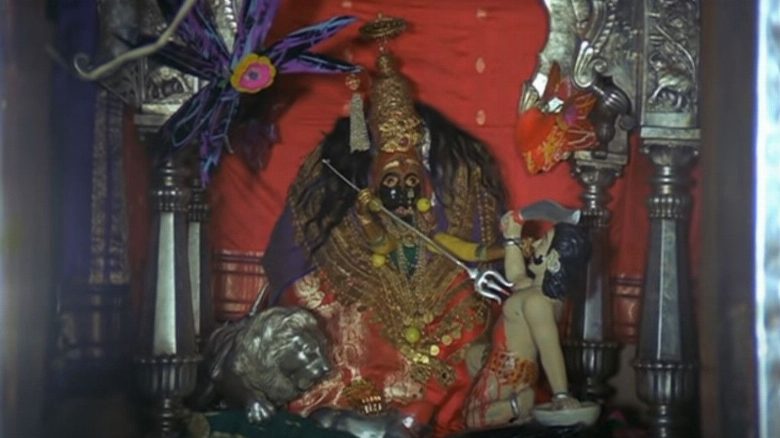
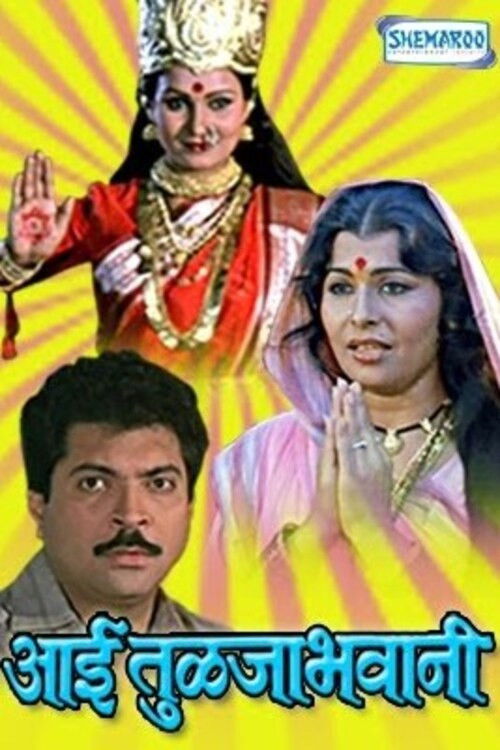
Priest Kadam Baba finds Venu, an orphan girl at the footsteps of the Aai Tulza Bhavani temple. He raises her up and she considers him as her real father. But unfortunately she is the daughter of a rape victim Kashi. Inamdar, who is the chairman of a sugar factory, wishes to get his handicap daughter, Mugdha married to Madhav, a lab in-charge in his factory. But Madhav falls for Venu and eventually they both get married. This angers Inamdar, he hatches a plan to get Madhav thrown out of his factory. More to their worst Madhav's mother is unhappy with their marriage as Venu didn't get dowry along with her. This results in conflict between her and Venu. Madhav's mother buries the holy idol of Aai Tulza Bhavani. Helpless Venu fights with the situation.
Steeped in the rich devotional traditions of Maharashtra, Aai Tulja Bhawani stands as a quintessential example of regional storytelling from the late eighties. Director Arun Karnataki crafts a narrative that leans heavily into the cultural fabric of rural life, where the sanctuary of the temple acts as both a physical refuge and a spiritual anchor for the protagonist. By focusing on the intersection of faith and the harsh social realities of the era, the film explores how an orphan raised under the watchful eye of a temple priest navigates a world dictated by rigid class hierarchies and deeply ingrained societal prejudices. It is a portrait of resilience, centering on a woman whose life is defined by her unwavering devotion and her struggle against the machinations of those who view her background as a mark of shame.
The film distinguishes itself by juxtaposing the sanctity of religious belief with the cold, transactional nature of local power dynamics. When the protagonist finds herself caught between the aspirations of a wealthy sugar factory owner and the expectations of a traditional, dowry-obsessed household, the drama shifts from a simple character study into a broader critique of rural power structures. Madhu Kambikar delivers a performance that anchors the emotional stakes, portraying a woman who must confront not just the external threats to her marriage but also the domestic hostility that arises when traditional values are weaponized against her. This creates a compelling tension that will resonate with viewers who appreciate classic Marathi cinema for its ability to balance spiritual mythology with grounded human conflict.
This production serves as a fascinating time capsule for audiences interested in the evolution of family dramas in Indian cinema. It captures a specific period where the moral weight of one’s lineage and the pressure to conform to domestic expectations were primary drivers of narrative conflict. By placing a holy idol at the center of a domestic dispute, the director elevates the story from a standard social melodrama to something more symbolic of the shifting tides within the community. Fans of vintage regional dramas who enjoy stories of perseverance and the triumph of the individual against institutional adversity will find this piece particularly engaging. It remains a notable entry for those looking to explore the thematic concerns that dominated the Marathi film landscape during that decade, offering a window into the intersection of faith and social standing that continues to hold relevance today.