About Amnesia
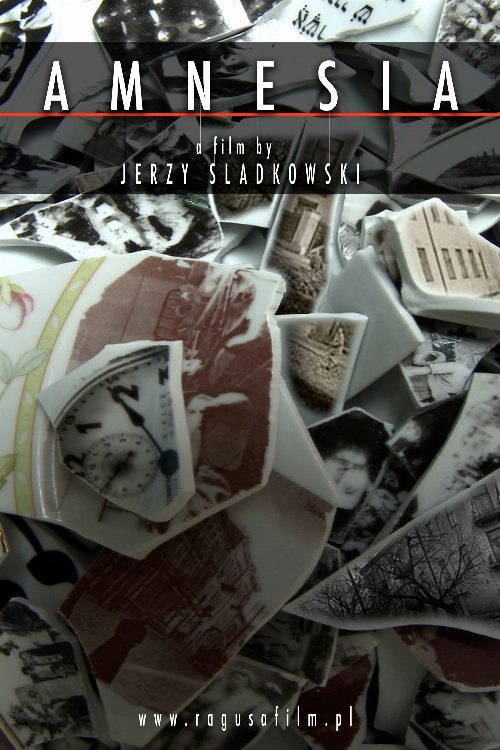
The film combines the personal, political, and historical, tracing the horror of a pogrom committed against the Jewish residents of the Polish city of Kielce on the 4th of July 1946. This atrocity was committed by their neighbors, fellow Poles of Kielce. This film seeks to gain some perspective on the Kielce Pogrom, an event that has been all but scrubbed from the history of Poland. The filmmaker searches for answers, even reflecting on his own family's complicity (and perhaps more) in the event. Given the current political climate in 21st century Poland, this film is fiercely relevant today, as we must confront and combat the legacies of anti-Semitism in Europe and around the world.
Few cinematic experiences are as haunting as those that force a nation to look into the mirror and confront the ghosts of its own collective silence. Jerzy Sladkowski delivers a searing exploration of the 1946 tragedy in Kielce, where a brutal act of violence shattered the lives of Jewish citizens at the hands of their very own neighbors. While Indian cinema often navigates historical trauma through the lens of partition or regional identity, this Polish documentary offers a chilling parallel for global audiences interested in how societies choose to remember or erase their most shameful moments. By anchoring the narrative in the filmmaker's personal inquiry into his family background, the film moves beyond a dry historical account, becoming a visceral investigation into the nature of complicity and the dangerous endurance of prejudice.
The documentary stands out for its refusal to treat the past as a closed chapter, instead positioning the 1946 events as a lingering shadow over modern European politics. For viewers of international cinema who appreciate the raw, investigative style found in recent social documentaries from the Malayalam or Tamil industries, this film provides a similarly rigorous look at the cracks in a nation's moral fabric. It is not merely a record of an atrocity but a study of how historical narratives are sanitized over time. Sladkowski does not offer easy answers; he challenges the viewer to sit with the discomfort of knowing that ordinary people can participate in extraordinary evil when fueled by long-standing societal hatred.
This work is essential viewing for those who believe that the power of the documentary form lies in its ability to spark uncomfortable conversations. It serves as a stark reminder that the fight against anti-Semitism and xenophobia is an ongoing process that requires constant historical vigilance. By peeling back the layers of denial surrounding a specific event in Kielce, the director invites us to scrutinize our own local histories for similar instances of buried truth. Those who gravitate toward films that examine the intersection of personal ancestry and national tragedy will find this a deeply moving, albeit difficult, cinematic achievement. It is a bold piece of filmmaking that prioritizes truth over comfort, ensuring that the victims of the past are not allowed to fade into the obscurity of institutional forgetting.