
About Confessions of a Lovelace: At Lust's End
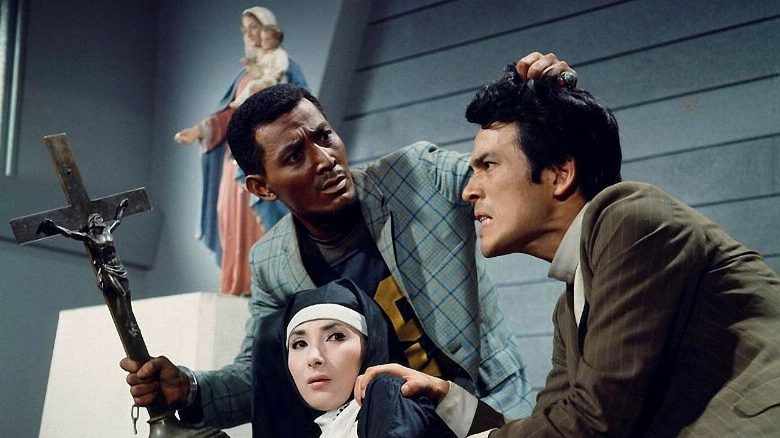
Jun Aisaka seduces one woman after another. His victims were flirtatious married woman Noriko, student Keiko, widow Mitsuko and dancer Rumi. As a result, he ends up in prison, but after escaping with another prisoner, he continues his criminal adventures with a partner. It is clear that this will not end well. Moreover, a couple of detectives are already on the trail of the criminals.
The late sixties in Japanese cinema represented a volatile intersection of social upheaval and the bold exploration of transgressive desires, a period perfectly encapsulated by the stark narrative of Confessions of a Lovelace: At Lusts End. Unlike the polished studio dramas that defined earlier eras, this film leans into the gritty, unvarnished reality of a protagonist whose existence is defined by a relentless cycle of seduction and moral decay. By focusing on a character who views human connection as a series of targets rather than genuine bonds, the film offers a cold, analytical look at the consequences of unchecked narcissism. It occupies a space similar to the darker noir experiments emerging from the Nikkatsu studios during that time, where the boundaries between romantic obsession and criminal desperation were perpetually blurred for the sake of stylistic impact.
The structure of the story is intentionally fragmented, mirroring the chaotic life of its central figure who moves through various social strata by exploiting the vulnerabilities of those he encounters. Whether he is manipulating a bored housewife, a naive student, or a disillusioned widow, the film avoids romanticizing his exploits, instead framing them as the catalyst for his eventual downfall. This perspective makes the film a compelling watch for those who appreciate character studies that refuse to offer redemption or comfort. It serves as a stark reminder of the era’s fascination with anti-heroes who operate outside the fringes of societal norms, providing a harsh reflection of the anxieties present in urban Japan during a time of rapid cultural change.
For fans of world cinema who are familiar with the evolution of Indian crime thrillers or the intense psychological dramas of the Malayalam and Tamil industries, this film offers a fascinating historical parallel. Just as contemporary regional Indian cinema often uses the lens of crime to critique class dynamics and patriarchal structures, this Japanese production utilizes the criminal underworld to dissect the hollowness of its lead character. The performance of Kaku Takashina provides a necessary anchor, grounding the film in a sense of impending doom that keeps the tension high despite the episodic nature of the plot. It is a quintessential piece for viewers who seek out cinema that challenges conventional morality, proving that even decades later, the cautionary tale of a man undone by his own insatiable appetites remains as chilling as ever.
Cast(21)