
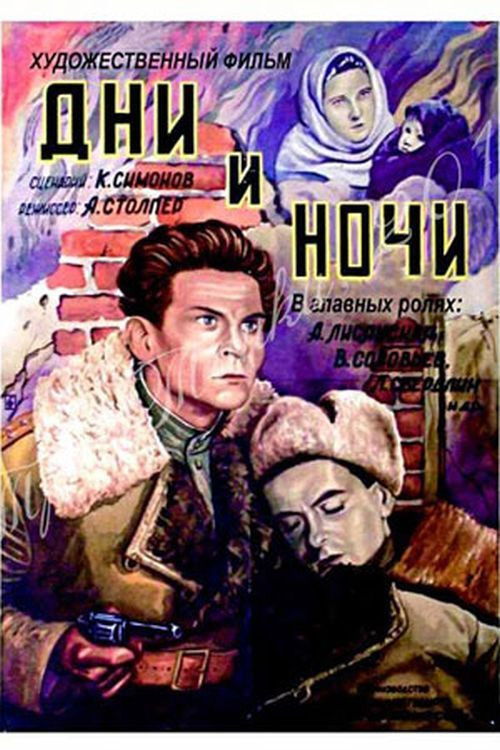
About Days and Nights
This literary adaptation was the first Soviet feature length dramatization, as opposed to documentary film, on the momentous Battle of Stalingrad.
Cinema often serves as a mirror for national identity, and few moments in history have shaped the Soviet consciousness quite like the pivotal confrontation at Stalingrad. Aleksandr Stolper brought a distinct urgency to this adaptation, marking a significant departure from the newsreel style of the era by crafting a narrative feature that prioritized human stakes over mere tactical documentation. While contemporary Indian cinema frequently explores the grit of historical conflicts through high-octane emotional resonance, this 1945 production operates with a stoic, atmospheric intensity that feels remarkably grounded. It captures the claustrophobic tension of soldiers caught in a landscape where every crumbling building tells a story of survival and sacrifice, presenting a rare glimpse into a turning point that redefined the twentieth century.
The film stands out as a foundational piece of war drama, demonstrating how early Soviet filmmakers navigated the balance between ideological messaging and the intimate realities of combat. By focusing on the daily grind of men and women thrust into the heart of a massive urban siege, Stolper avoids the trap of glorifying the carnage. Instead, he highlights the psychological endurance required to hold a position when the world seems to be collapsing around you. For audiences today, particularly those accustomed to the grand scale of modern Tollywood or Bollywood war epics, this piece offers a fascinating study in restraint. It is a work for those who appreciate cinema that favors long, tense silences and the weight of weary expressions over bombastic spectacle, proving that the most profound battles are often those fought within the mind.
The presence of actors like Lev Sverdlin and Yuri Lyubimov adds a layer of gravitas that grounds the production in authentic character work, steering it away from caricature. Because it was crafted in the immediate wake of the conflict, the film possesses a rawness that later, more polished productions simply cannot replicate. It occupies a unique space in global film history, acting as both a historical artifact and a piece of serious dramatic art. Viewers who find themselves drawn to the nuances of regional Indian cinema that emphasize human struggle against systemic or geopolitical odds will likely find a familiar cadence here. It remains a essential watch for anyone interested in the evolution of the war genre, serving as a reminder that the most compelling stories are those that capture the quiet, desperate humanity found in the middle of a global storm.