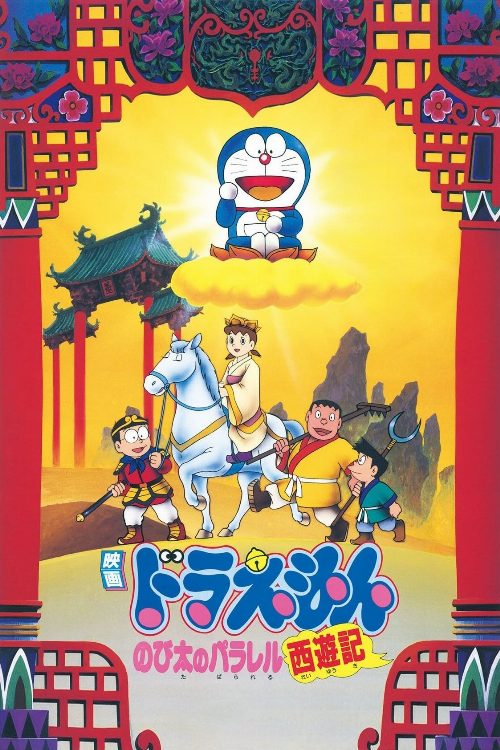
Doraemon: The Record of Nobita's Parallel Journey to the West(1988)
About Doraemon: The Record of Nobita's Parallel Journey to the West
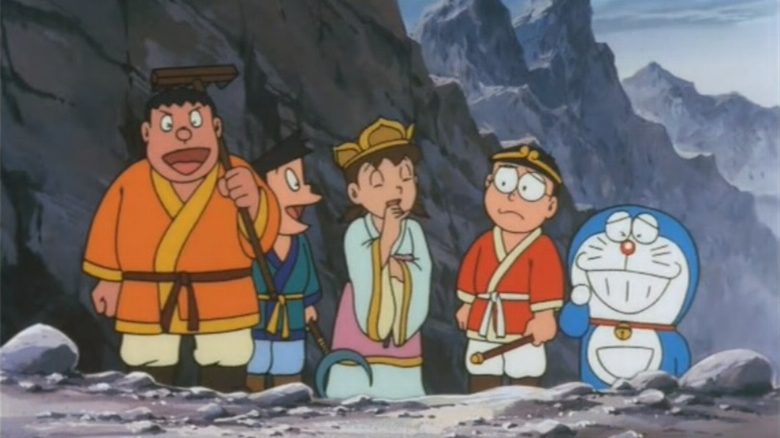
Nobita, Gian, Shizuka, and Suneo is preparing for a school play on the "Journey to the West". As they are arguing about who should play the role of the monkey king, Nobita suggested that the real monkey king should play the role. Because the monkey king is only a legend, Nobita and Doraemon have decided to go back in time using the time machine and make a fake one and show Gian, Shizuka, and Suneo to prove that they are right. Unfortunately, Doraemon's machine allowed the fictional monsters to come to the real world and defeated the entire human races, thus turning the future (Nobita's time) into a demon-ruled world. In order to reverse the change, Doraemon and gang needed to return to the past and capture the demons back into the machine. On the way, they have met the real monk and rinrei (a child). At the end, they have either returned the demons back to the machine or destroy them with Dorami's help, thus turning the future back to normal.
Few animated features from the late eighties capture the whimsical yet high-stakes imagination of Japanese children like The Record of Nobita's Parallel Journey to the West. While modern audiences in the Indian film landscape are increasingly accustomed to multiversal narratives and complex time-travel mechanics, this classic adventure serves as a foundational blueprint for the genre. By blending the legendary Chinese folklore of the Monkey King with the signature futuristic gadgetry of a robotic cat, the film creates a unique bridge between historical myth and science fiction. It is a testament to the enduring appeal of the Doraemon franchise, which has found a massive, loyal following across South Asia, that this early installment feels just as vibrant today as it did upon its initial release.
The premise pivots on the chaotic intersection of classroom ambition and technological interference, as Nobita and his friends attempt to bring a literary icon to life. What begins as a lighthearted disagreement over a school play quickly spirals into a desperate struggle for survival when their meddling with spacetime accidentally unleashes a tide of demons upon the modern world. This shift from mundane school life to an epic, world-saving odyssey is a hallmark of the series, effectively raising the stakes while maintaining the core emotional bonds of the central group. Viewers who enjoy the fast-paced, ensemble-driven storytelling found in contemporary Telugu or Hindi animation will find the camaraderie and problem-solving elements here particularly engaging.
This film stands out for its willingness to embrace darker, more ominous themes without sacrificing the family-friendly charm that defines the brand. The journey into a demon-ruled reality provides a stark contrast to the usual suburban antics, pushing the characters to display a level of bravery that resonates with younger viewers. Nobuyo Oyama and the classic voice cast deliver performances that ground the fantastical events in genuine heart, ensuring the audience remains invested in the group’s success. For those who appreciate cinematic experiences that weave together cultural heritage and imaginative escapism, this feature remains a vital watch. It is an essential piece of animation history that highlights why the franchise has successfully transcended its regional origins to become a global staple, proving that even the most legendary tales can be refreshed through the lens of a time-traveling robot.