About Gertrud
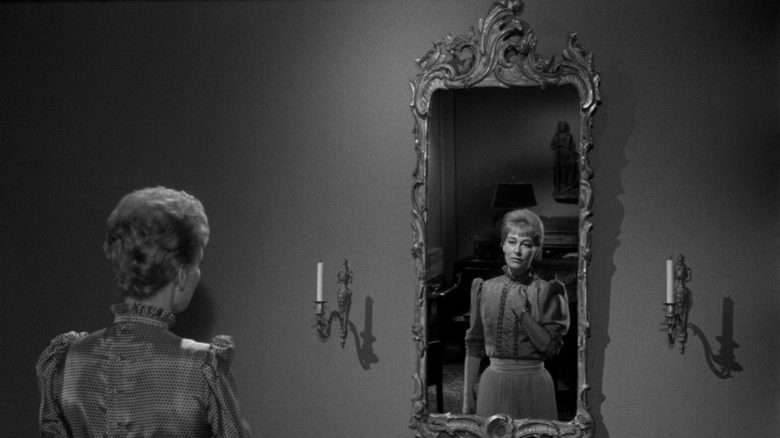
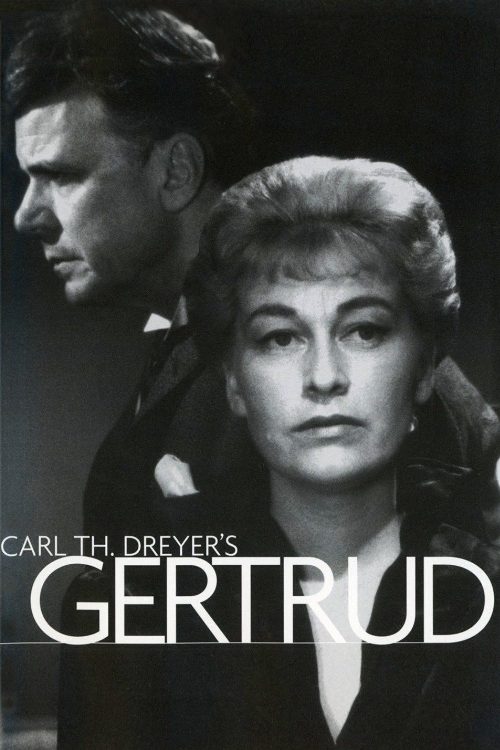
Hopeless romantic Gertrud inhabits a turn-of-the-century milieu of artists and musicians, where she pursues an idealized notion of love that will always elude her. She abandons her distinguished husband and embraces an affair with a young concert pianist, who falls short of her desire for lasting affection. When an old lover returns to her life, fresh disappointments follow, and Gertrud must try to come to terms with reality.
Carl Theodor Dreyer delivers a masterclass in emotional austerity with Gertrud, a film that feels less like a traditional narrative and more like a carefully composed series of existential portraits. Set against the backdrop of turn of the century European society, the story follows a woman whose uncompromising demand for absolute devotion sets her on a collision course with the fallible men around her. While modern Indian cinema often explores the complexities of domestic duty and sacrifice through high energy musical numbers or intense melodrama, this Danish classic takes the opposite route. It operates in a vacuum of stillness, where the weight of a spoken word carries more impact than any physical action. For viewers accustomed to the sprawling, emotional tapestries of Tamil or Telugu dramas, this film offers a fascinating study in restraint, proving that the search for authentic connection is a universal pursuit that transcends cultural borders.
The film is anchored by a central performance that radiates a kind of cold, intellectual intensity, making it a mandatory watch for those who appreciate character driven cinema over plot heavy spectacles. Gertrud is not a movie that relies on twists or sudden shifts in pace; instead, it demands patience as it peels back the layers of a woman who refuses to settle for anything less than total fulfillment. Her interactions with her husband, a former lover, and a young musician serve as a mirror to her own isolation, highlighting the friction between societal expectations and individual desire. It is a quintessential piece for students of world cinema who want to see how silence and long takes can be used to construct a suffocating atmosphere of regret and longing.
Dreyer, a filmmaker known for his technical precision, strips away the artifice of the period drama to focus entirely on the philosophy of his protagonist. By placing the audience in a position of quiet observation, he forces us to confront the uncomfortable reality that human beings are often incapable of meeting our deepest emotional needs. This is a film for the contemplative viewer, one who finds beauty in the architecture of a conversation and the subtle shifts in a facial expression. Even decades after its release, the film remains a sharp, sophisticated exploration of the human heart, standing as a testament to the idea that love is an elusive ideal we are all trying, and often failing, to grasp.