About Ghost of the 53 Stations
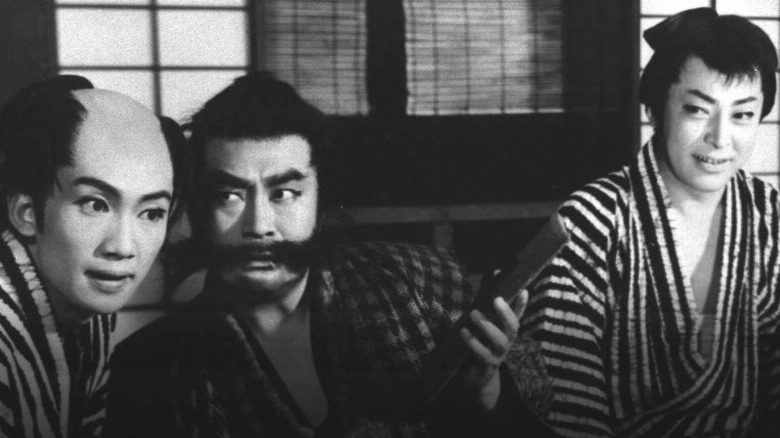
Kota and Kosuke, from the Hikyaku-ya shop in Edo, went to Kyoto. Contrary to their carefree appearance, they carry a secret letter concerning the Aoba clan from Kyoto. A samurai who calls himself Okuma Danemon joins them on their journey, and soon people begin to appear one after another, seeking to get a secret letter...
Navigating the treacherous roads between Edo and Kyoto in the mid-twentieth century of Japanese cinema, Ghost of the 53 Stations emerges as a fascinating hybrid that bridges the gap between slapstick humor and supernatural dread. Directed by Kokichi Uchide, this 1960 production captures a specific moment in Japanese genre filmmaking where the traditional jidaigeki period piece began to bleed into the stylized, atmospheric horror that would later define the country's global export. By grounding the narrative in the mundane reality of a courier service, the film elevates a simple errand into a high-stakes adventure, forcing its protagonists to contend with both human greed and spectral interference. It is a testament to the versatility of the era, where a lighthearted premise could pivot effortlessly into something genuinely unsettling.
For viewers accustomed to the high-octane thrillers of the modern Telugu or Tamil industries, where plot twists often rely on rapid-fire editing and intense escalation, Ghost of the 53 Stations offers a refreshing change of pace. The film functions similarly to road movies found in contemporary Indian cinema, where the journey itself acts as a crucible for character growth and external conflict. The presence of Ryuji Shinagawa and Tetsunosuke Tsukigata brings a grounded chemistry to the screen, anchoring the more whimsical elements of the script. This film is an ideal pick for cinephiles who appreciate the craftsmanship of classic black-and-white cinematography and the slow-burn tension of regional folk horror. It does not rely on modern jump scares but instead builds a thick, pervasive atmosphere that mirrors the superstitions surrounding the famous Tokaido route.
The inclusion of the mysterious samurai, Okuma Danemon, serves as the perfect catalyst to disrupt the fragile equilibrium of the leads. As the duo from the Hikyaku-ya shop finds themselves pursued by shadowy figures, the film evolves into a cat-and-mouse game that challenges the audience to distinguish between mortal enemies and restless spirits. It is a masterclass in tone management, balancing the inherent comedy of two bumbling messengers with the genuine danger posed by the secret letter they carry. While it hails from a different era and culture, its core themes of duty, paranoia, and the long shadows cast by history resonate deeply with anyone who enjoys a well-constructed period mystery. Fans of classic world cinema will find this a compelling artifact, showcasing a unique blend of levity and terror that remains effective even decades later.