About Why Don't You Play in Hell?
In Japan, gonzo filmmakers hatch a three-pronged plan to save an actress's career, end a yakuza war and make a hit movie.
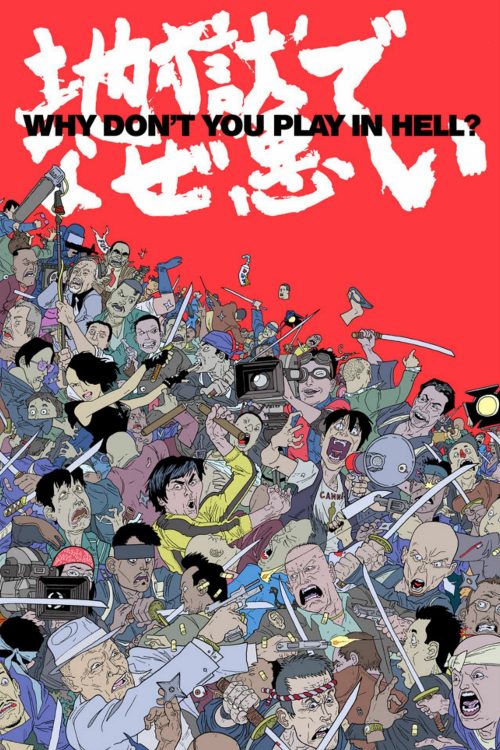
Sion Sono has long operated as the cinematic equivalent of a high-voltage wire, and Why Don't You Play in Hell remains perhaps the most manic distillation of his obsession with the intersection of artifice and bloodshed. While Indian cinema often navigates the divide between mass-market entertainment and auteur-driven narratives, this Japanese cult classic leans into a chaotic, genre-bending energy that makes even the most ambitious Tollywood action epics look restrained. The premise centers on a group of amateur filmmakers who find themselves caught in the crosshairs of a brewing gang conflict, deciding that the only logical response to a looming yakuza massacre is to capture the carnage on celluloid. It is a fever dream of a movie, operating on the logic that filmmaking is a life-or-death pursuit worthy of total sacrifice.
The film serves as a love letter to the golden age of celluloid, specifically targeting the gritty aesthetics of grindhouse cinema while mocking the vanity of the industry. For viewers accustomed to the polished melodrama of Hindi or Tamil features, this experience might feel jarringly discordant, yet it shares a fundamental DNA with the maximalist spirit of contemporary Pan-Indian blockbusters. It is not interested in realism but in the visceral, explosive power of the image. The cast delivers performances that are intentionally heightened, perfectly matching the director's propensity for turning mundane settings into stages for grand, operatic violence. Whether it is the frantic editing or the sudden shifts from slapstick comedy to cold-blooded brutality, the film demands an audience that thrives on sensory overload.
This project is essential viewing for anyone interested in how international directors deconstruct the cult of celebrity and the vanity of the director. Much like the way Malayalam cinema has recently shifted toward tight, high-concept thrillers that challenge regional expectations, this work pushes the boundaries of what is acceptable within a commercial framework. It is positioned as a riotous, violent, and deeply sincere ode to the medium of film itself, proving that sometimes the best way to process trauma is to frame it behind a lens. If you appreciate cinema that treats the act of filming as a sacred, albeit insane, crusade, this remains one of the most singular entries in the director's extensive filmography. It is a chaotic, unapologetic blast of creative energy that refuses to settle for anything less than total, cinematic anarchy.
Cast(35)