
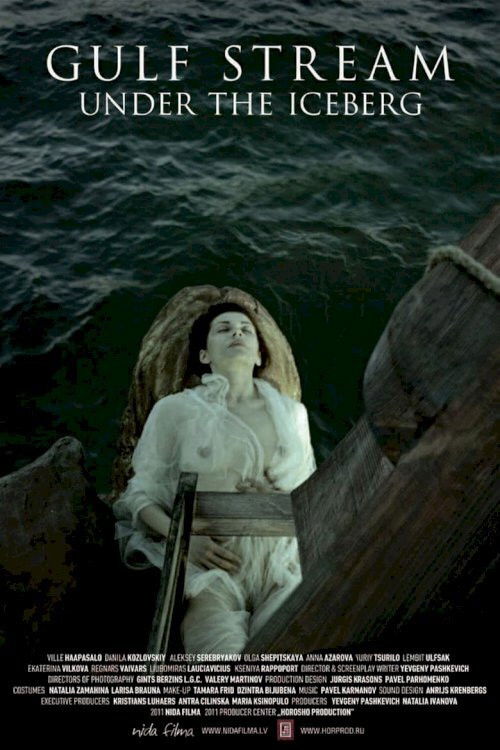
Gulf Stream Under the Iceberg(2012)
About Gulf Stream Under the Iceberg
Adam’s first wife Lilith is mentioned in the ancient Oriental legends, in Talmud and in the medieval books of Cabala. According to these sources, she was not created from Adam's rib like Eve but from clay like he himself. Nevertheless Lilith was not recognised by Adam as his equal and left him after a quarrel heading for Babylon. She has no soul, and she is immortal. Lilith assumes different names, can change her appearance, and takes possession of men against their will. Once it's accomplished, she leaves her victims forever, marking them for either spiritual, or physical death. Whatever she does it is neither Good nor Evil. She is made of an altogether different matter. Inspired by the works of French writer Anatole France, Yevgeny Pashkevich‘s GULF STREAM UNDER THE ICEBERG consists of three dramatically interwoven stories with the immortal Lilith stalking through time and space with her demonic mission.
Yevgeny Pashkevich delivers a visually arresting exploration of the eternal feminine in Gulf Stream Under the Iceberg, a film that dances on the razor edge between historical drama and dark fantasy. By weaving together three distinct temporal threads, the narrative invites viewers into a world where the mythological figure of Lilith navigates the centuries, leaving a trail of existential wreckage in her wake. Unlike standard genre fare that relies on jump scares or conventional tropes, this Russian production opts for a deeply philosophical tone, channeling the intellectual weight of Anatole France to dissect the nature of human desire and the inevitable decay of the soul. For the audience accustomed to the sprawling, emotionally resonant storytelling found in modern pan-Indian cinema, this film offers a fascinating shift in pacing, moving away from high-octane spectacle toward a haunting, atmospheric meditation on immortality.
The film feels particularly relevant to contemporary viewers who appreciate global cinema that challenges moral binaries. Lilith is presented here not as a traditional antagonist, but as an elemental force existing outside the human categories of righteousness and malice. This creates a compelling tension for the audience, as we observe the various men who cross her path and succumb to her influence. It is a bold stylistic choice that prioritizes mood and symbolism over linear progression, making it a perfect pick for those who enjoy surrealist narratives or films that demand active interpretation. The presence of actors like Danila Kozlovsky and Aleksey Serebryakov lends a grounded gravity to the proceedings, ensuring that even the most abstract sequences retain a visceral human connection.
For fans of Indian cinema, especially those who enjoy the layered storytelling of directors who experiment with folklore and magical realism, this project serves as a sophisticated case study in how to adapt ancient, trans-cultural myths for the modern screen. While the cultural backdrop is firmly rooted in European literary tradition, the fundamental questions regarding destiny, obsession, and the haunting nature of the past are universal. Pashkevich manages to maintain a sense of mystery throughout the runtime, ensuring that the internal logic of his three-tiered story never feels overly explanatory. Those seeking a film that favors intellectual curiosity and dark, poetic visuals over simple resolution will find this work to be a deeply immersive experience. It is a rare example of a film that treats its audience as an intellectual partner, rewarding patience with a rich, albeit chilling, tapestry of human frailty.