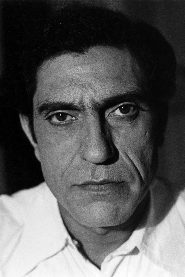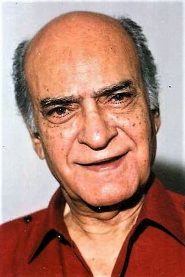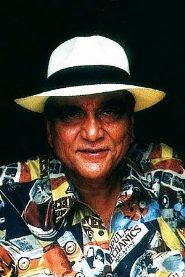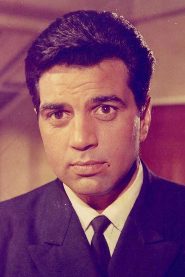
About Ilaaka
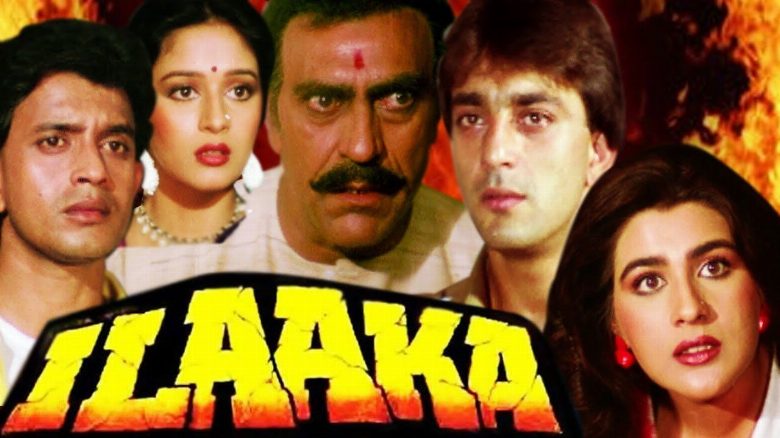
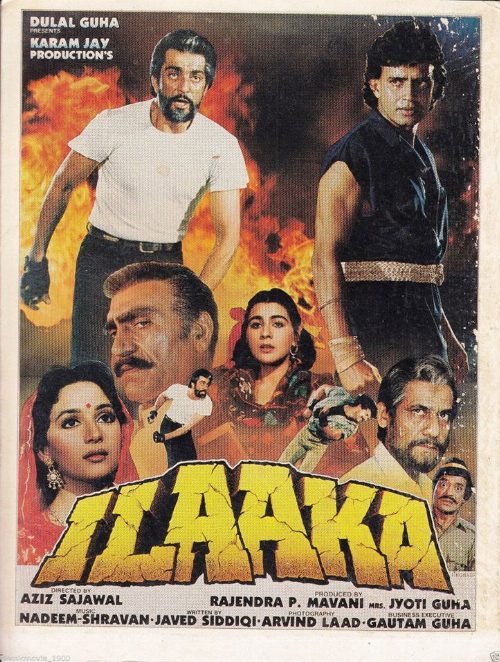
Ilaaka - has a small little world of its own. A world of dreams and desires love and longings, hatred and hardships. This is Raja who stands at the cross roads of truth and traditions.. In this small world we have Suraj and Neha, the two crusaders against the might of evil. And we have the evil incarnated too! Nagar as vicious as a viper and as blood thirsty as a wolf. Here we have good old Masterji who is ready to sacrifice himself for his tiny world. And we have cunning Swami also, who is ready to destroy everything. Ilaaka has love and laughter, blood and tears. It is as delicate as a petal and as hard as steel. Ilaaka, a painting which has all the seven colours of rainbow.
The late eighties represented a fascinating intersection in Hindi cinema where the raw, street-level grit of the previous decade began to fuse with the high-octane ensemble spectacles that would define the nineties. Ilaaka stands as a quintessential artifact of this transition, delivering a narrative that balances the emotional weight of familial duty against the burgeoning trend of larger than life confrontations. By anchoring its story in a localized territorial conflict, the film manages to elevate a standard crime drama into a study of power dynamics, pitting principled protagonists against forces that seek to dismantle the moral fabric of their community. It captures that specific era of Bollywood filmmaking where the stakes were always personal, and the resolution of a conflict required a cathartic physical display of righteousness.
The film benefits immensely from a multi-generational cast that brings distinct flavors to the screen. Watching Mithun Chakraborty and Sanjay Dutt share the frame provides a study in contrasting screen personas, with the former often leaning into the agile, underdog fighter archetype while the latter channels a more brooding, intense energy. The presence of veterans like Rakhee Gulzar and Dharmendra adds a layer of gravitas that grounds the more explosive action sequences. This blend of seasoned performers and rising stars was a reliable formula for the time, ensuring that the audience felt connected to the legacy of the characters while remaining thrilled by the kinetic pacing of the revenge arcs. It serves as a reminder of a period when cinema was built on the charisma of its stars as much as the intensity of its antagonists.
For viewers who enjoy the vintage aesthetic of eighties Hindi action, this movie offers a masterclass in the genre tropes that dominated the box office. It is crafted for those who appreciate the theatricality of classic confrontations where the hero represents a shield for the vulnerable against the backdrop of corruption. While modern audiences might find the pacing distinct from the sleek thrillers of today, there is an undeniable charm in its earnest approach to storytelling. The film avoids nuance in favor of clear moral demarcations, making it a perfect example of the high stakes, high emotion, and high energy entertainment that defined the Indian commercial landscape during the twilight of the decade. It remains an essential watch for anyone documenting the evolution of the action drama in Indian cinema.
Cast(16)