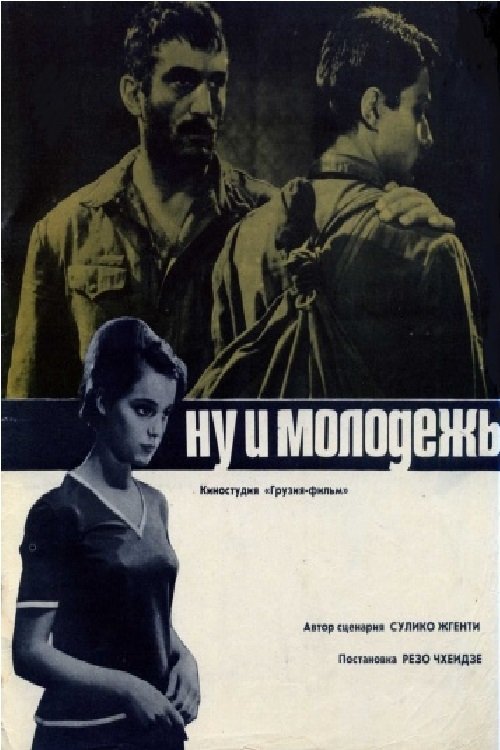
About Look at These Young People!
Film school desk akhladaprenil guys from Tbilisi in the early days of World War II soldier's overcoat to put on, temporarily put aside their dreams, loved ones and fire parted ways scattered. Thus began a new phase of their lives, gantsdebita and misery. Yesterday's long-suffering smile in front of the boys grow up into fighters.
In the landscape of 1960s world cinema, Georgian filmmaking emerged as a distinct, poetic voice that often balanced the weight of history with a delicate, youthful sensitivity. Look at These Young People, a 1969 production from the Tbilisi studios, captures this transition with striking emotional clarity. Rather than settling for a standard war epic, the film focuses on the jarring intersection of artistic aspirations and mandatory duty. It follows a circle of inseparable friends whose academic ambitions are abruptly halted by the arrival of global conflict, forcing them to trade their intellectual debates for the harsh reality of military uniforms. This narrative choice elevates the film from a simple period drama to a poignant meditation on the fragility of youth when confronted by the machinery of history.
The film stands out for its stylistic restraint, favoring intimate character development over the bombastic depictions of combat often seen in cinema of that era. By centering the story on the bond between these young men, the director creates a relatable, humanistic anchor that resonates across borders. It is a work that values the internal landscape of its characters, showing how the sudden shift from the classroom to the front line forces an accelerated maturation. For viewers interested in the evolution of Eastern European storytelling, this film provides an essential look at how regional creators navigated the social pressures of the time while maintaining a commitment to artistic expression. The performances, led by a cast that brings a palpable authenticity to their roles, manage to convey the quiet despair of lost potential without ever feeling overly sentimental.
Audiences who appreciate character-driven dramas that explore the psychological toll of transition will find this to be a compelling watch. It is particularly suited for those who enjoy the works of directors who prioritize atmosphere and performance, as the film relies heavily on the nuanced interactions between its lead actors. While it is rooted in a specific time and place, the underlying themes of camaraderie and the sudden, forced end of innocence are universal. It serves as a reminder that every generation has its own version of these challenges, making the story feel surprisingly relevant to modern viewers. By focusing on the small, human moments that flicker out under the shadow of global instability, the film cements its legacy as a thoughtful, melancholic, and enduring piece of cultural history that remains a fascinating study of the human condition.
Cast(15)