About Miracle in Milan
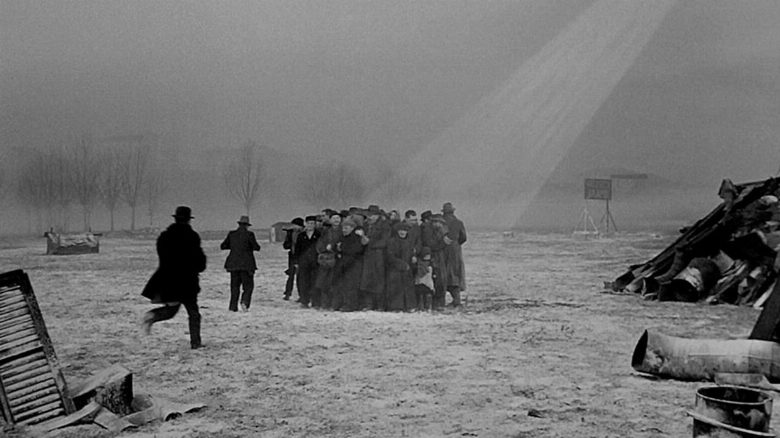
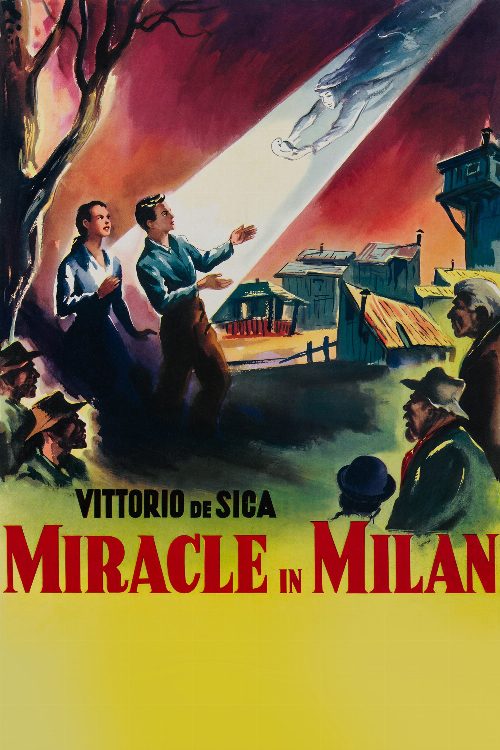
Once upon a time a wise and kind old woman discovers a baby in her cabbage patch. She brings up the child and, when she dies, the boy, Totò, enters an orphanage. Totò leaves the orphanage a happy young man, and looks for work in post-war Milan. He ends up with the homeless and organizes them to build a shanty town in a vacant lot. But when greedy developers threaten the community’s land, Totò will need all the help he can get in order to find an impossible way out.
Vittorio De Sica’s 1951 masterpiece Miracle in Milan occupies a singular space in cinematic history, blending the gritty reality of neorealism with a whimsical, almost fable-like quality that feels decades ahead of its time. While many of its contemporaries focused solely on the harsh socio-economic struggles of post-war Italy, this film dares to inject a sense of wonder into the lives of the marginalized. The story follows a young protagonist named Toto who rises from humble beginnings to lead a community of displaced individuals in a shanty town. By introducing surreal, dreamlike elements into a landscape of poverty, the narrative challenges the viewer to find dignity and magic even when facing systemic greed and displacement. It remains a poignant reminder that hope is a radical act, especially when society attempts to push the vulnerable to the periphery.
For audiences accustomed to the emotional depth found in modern Indian cinema, particularly the socially conscious dramas emerging from the Malayalam or Tamil industries, Miracle in Milan offers a striking parallel. Much like the films of Satyajit Ray or the more grounded narratives currently revitalizing regional Indian storytelling, this work prioritizes human connection over grand spectacle. The camaraderie displayed by the shanty town residents echoes the collective spirit often celebrated in community-driven Indian films, where the protagonist acts as a catalyst for unity against external pressures. Viewers who appreciate allegorical storytelling that balances humor with melancholic social commentary will find this film deeply resonant. It treats its characters with a tenderness that makes their struggle for survival feel urgent and universal, transcending its mid-century Italian origins.
The film stands as a testament to De Sica’s evolving vision as a director who refused to be boxed into a singular stylistic category. By moving away from the stark austerity of his previous works, he invites the audience to view the world through a lens of compassion rather than just critique. The performance of the lead, alongside the supporting cast, creates a palpable sense of warmth that permeates the screen despite the bleak circumstances of the setting. This is an essential watch for cinephiles who value historical landmarks that pushed the boundaries of genre, proving that fantasy can be used to articulate profound truths about human rights and social inequality. Whether you are a student of classic European cinema or someone who enjoys narratives about the triumph of the human spirit, this charming yet biting social satire continues to hold significant weight in the global canon.
Cast(15)










Crew
Assistant Camera
Producer
First Assistant Director
Script Supervisor
Production Supervisor
Still Photographer
Story
Production Secretary
Similar Films