
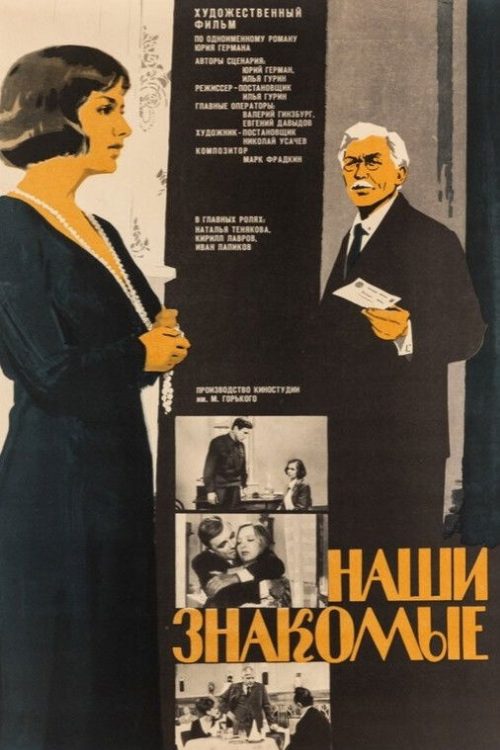
About Our Friends
After the death of her father, Antonina Staroselskaya has difficulty finding work. A dull life is the cause of illness. A merchant seaman takes care of the sick Tona. After the marriage, he is arrested for smuggling, and the care of Tonya is transferred to a neighbor, who beats her from time to time. A chance meeting with the builders of a residential area awakens the desire to be closer to people, to become needed by someone - and Tonya comes to the construction site...
Soviet cinema of the late sixties often prioritized the quiet dignity of the working class, and Our Friends stands as a poignant example of this realist tradition. The narrative centers on Antonina Staroselskaya, a woman whose existence is fractured by grief and systemic isolation following the loss of her father. While many films of that era leaned into grand political statements, this drama takes an introspective turn, focusing on the psychological erosion that occurs when a person feels untethered from society. The protagonist experiences a cascading series of personal tragedies, from professional instability to a marriage marred by betrayal and domestic cruelty, yet the film manages to avoid becoming a purely bleak exercise by emphasizing the human capacity for resilience through labor and community.
For those who appreciate the aesthetic and tonal sensibilities of classic Russian dramas, this film offers a fascinating look at the intersection of individual struggle and the collective spirit of the era. The portrayal of a construction site as a site of potential salvation is particularly striking, reflecting a period when communal effort was frequently framed as a path toward personal reclamation. It is a thoughtful exploration of what it means to be useful in a world that has discarded you, and it captures the transition from a life of solitary suffering to one defined by social connection. The lead performance by Yelena Kozelkova is central to this transformation, grounding the character’s vulnerability in a palpable sense of longing for purpose.
Audiences who follow the evolution of global character studies will find much to admire here, as the film serves as a precursor to more modern explorations of marginalization. While it lacks the high-octane pacing of contemporary Indian regional cinema, its focus on emotional interiority will resonate with viewers who enjoy slow-burn dramas that prioritize human connection over spectacle. The film is less interested in the mechanics of the plot and more concerned with the subtle shifts in the protagonist’s outlook as she encounters the builders. By choosing to focus on the healing power of shared work rather than just the trauma of her past, the director provides a meditative experience that remains relevant for anyone interested in the social history of mid-century cinema. It stands as a testament to the idea that even in the most unforgiving circumstances, a simple sense of belonging can provide the foundation for a new beginning.
Cast(18)