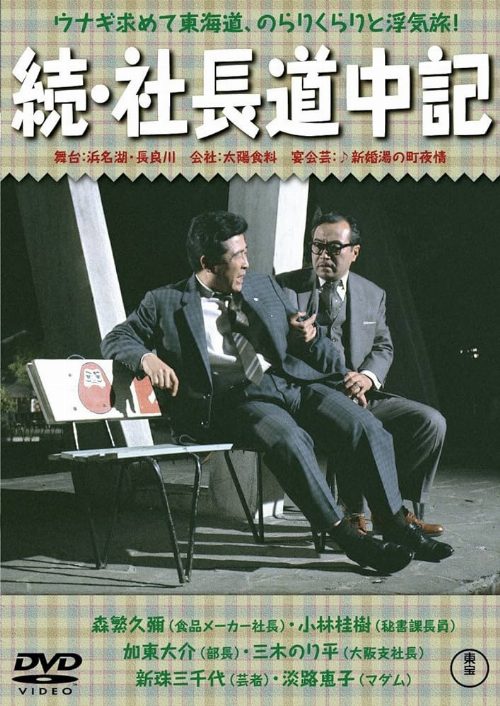
About Playboy President: Part II
After a promotion brings new professional challenges, a diligent employee is pulled into corporate matchmaking and a high-stakes business conflict over a critical eel supply.
The cinematic landscape of early sixties Japan frequently balanced the rigid expectations of post-war corporate life with the chaotic, often comedic reality of the individuals inhabiting those systems. Shue Matsubayashi crafts a narrative in Playboy President Part II that serves as a fascinating time capsule of the Salaryman era, where the boundaries between professional ambition and personal reputation were perpetually blurred. By centering the story on an unassuming worker thrust into the complexities of executive matchmaking and the absurdity of a regional resource crisis involving eel, the film captures a distinct flavor of mid-century satire. It is a work that feels remarkably relevant even decades later, highlighting how the internal politics of a firm can quickly spiral into farcical territory when social obligations collide with economic necessity.
Within the broader spectrum of Japanese comedies from this period, the film stands out for its sharp focus on the social hierarchy of the boardroom. Hisaya Morishige brings a seasoned, charismatic presence to the lead, grounding the more outlandish elements of the plot in a performance that balances world-weary cynicism with an earnest desire for order. For viewers who appreciate the dry wit found in later office-set narratives or the character-driven humor of classic ensemble pieces, this sequel offers a deep dive into the tensions of a rapidly modernizing society. It avoids the heavy-handed moralizing of more serious dramas, opting instead to poke fun at the self-importance of managers who treat business deals with the gravity of international diplomacy.
The film is particularly rewarding for enthusiasts of vintage Japanese cinema who enjoy watching how the industry navigated the transition between traditional values and global commercial pressures. Matsubayashi, known for his ability to maintain momentum in multi-character narratives, ensures that the stakes remain high enough to keep the audience engaged without sacrificing the lighthearted tone. Whether one is watching for the historical depiction of Tokyo business culture or simply for the impeccable comedic timing of the supporting cast, the experience is consistently sharp and observational. It is an essential watch for those interested in how the domestic struggles of the everyday employee were transformed into grand, entertaining spectacles on the big screen, proving that even the most mundane corporate task can become a source of genuine, relatable conflict.
Cast(27)