About So What
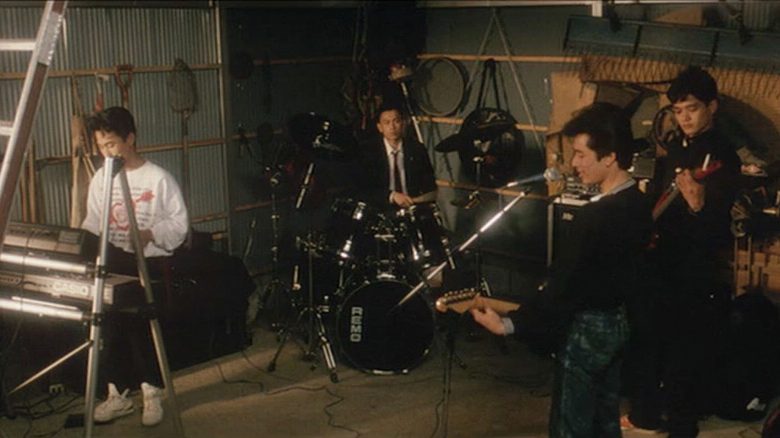
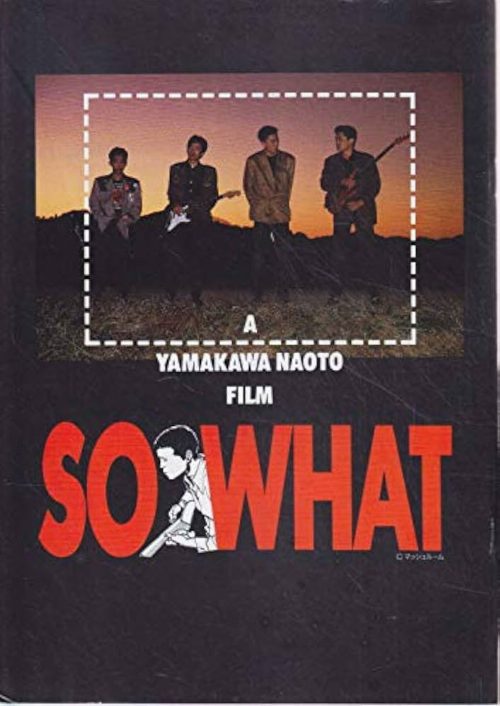
In a small town, high school students in their final year try to balance their studies while also playing together in a rock band.
The late eighties in Japanese cinema captured a distinct transition in youth culture, and So What stands as a quintessential artifact of that era, mapping the tension between rigid societal expectations and the rebellious pulse of garage rock. While many coming of age stories from this period rely on melancholic tropes, this film injects a visceral, rhythmic energy into the suburban landscape. It follows a group of high school seniors who find themselves caught in the friction between preparing for their futures and the immediate, sensory high of performing in their musical ensemble. By focusing on the transient nature of their final school year, the movie highlights the desperation inherent in trying to capture a sense of identity before the weight of adulthood permanently settles in.
The production serves as a compelling time capsule for fans of Japanese independent cinema, featuring a roster of actors who would go on to become staples of the industry, including Renji Ishibashi and Naoto Takenaka. Their involvement adds a layer of gravitas to a story that might otherwise have remained a simple teen drama. For audiences who appreciate the current wave of international films exploring the intersection of art and academic pressure, this narrative remains remarkably relevant. It effectively articulates the universal struggle of finding one's voice in an environment that prizes conformity above all else, all while maintaining the raw, unpolished aesthetic that defined the independent scene of the late eighties.
Viewers who enjoy character driven dramas that prioritize mood and atmosphere over explosive plot developments will find much to admire here. The music acts as a central character rather than a mere backdrop, driving the momentum of the scenes and reflecting the internal emotional states of the protagonists. It is particularly striking for those interested in the evolution of Japanese youth films, as it sits comfortably alongside other cult classics that dared to challenge the traditional student experience. Whether you are a devotee of vintage world cinema or simply a fan of stories about the transformative power of creative expression, this film provides a thoughtful look at the brief window where dreams and reality collide. Its enduring appeal lies in its refusal to offer easy solutions, choosing instead to celebrate the chaotic, beautiful uncertainty of youth.