About Spring Tempest
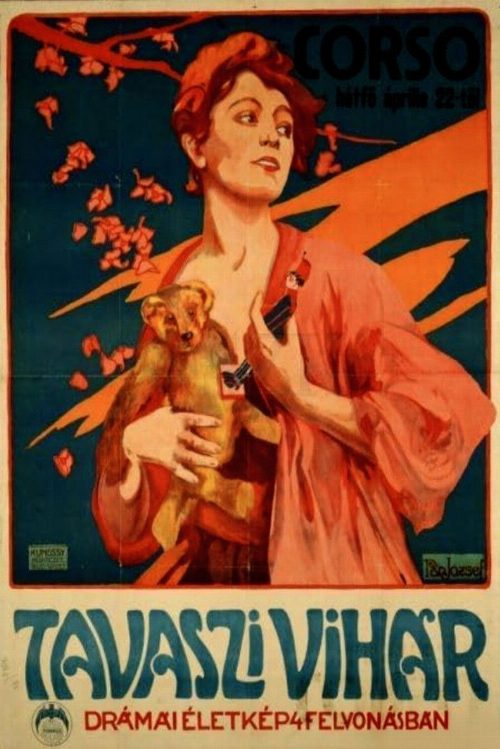
1918 Hungarian silent film.
Stepping back over a century into the archives of European silent cinema, Spring Tempest offers a fascinating window into the stylistic sensibilities of 1918 Hungarian filmmaking. While modern audiences often gravitate toward the high-octane narratives of contemporary Indian industries like Tollywood or Bollywood, there is a profound, quiet power in revisiting these foundational works. Directed by Alfred Deesy, a prominent figure in the early development of Hungarian motion pictures, the film captures a specific period of artistic transition. During a time when the world was undergoing massive geopolitical shifts, creators like Deesy were experimenting with visual storytelling that relied entirely on composition, lighting, and the expressive capabilities of actors like Myra Corthy and Norbert Dan to convey complex emotional arcs without the aid of dialogue.
The drama unfolds with a focus on human intimacy that feels surprisingly universal despite the vast temporal and cultural distance. By stripping away the auditory layer, the film forces the viewer to pay closer attention to the nuances of character interaction, a technique that mirrors the heightened melodrama often found in classic Indian period pieces where gesture and gaze carry as much weight as any spoken line. This is not a film for those who require fast-paced edits or explosive action; rather, it serves as a meditative experience for cinephiles and historians who appreciate the evolution of the medium. For those who enjoy exploring how international cinema established its visual language before the advent of sound, this production provides a vital case study in early European craft.
Positioned as a significant artifact of its era, Spring Tempest allows us to examine the thematic preoccupations of a society on the brink of change. The collaboration between cast members like Bogyo Banoczi and Lajos Gellert suggests a cohesive ensemble approach typical of the Hungarian studios of that decade, which were striving to define a national identity through the lens of drama. Whether you are a student of film history or simply a curious viewer looking to broaden your horizons beyond the current blockbusters from Chennai or Mumbai, this project stands as a testament to the enduring nature of storytelling. It reminds us that even in the absence of spoken language, the fundamental human conditions of love, conflict, and longing remain the primary drivers of compelling cinema across every border and generation.