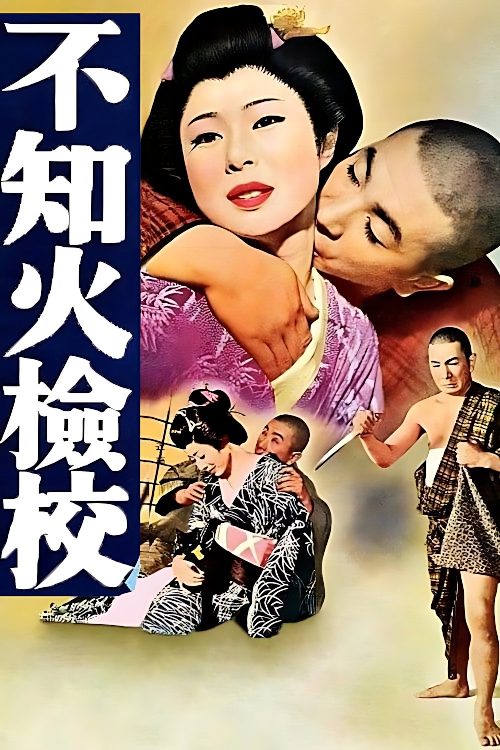
About The Blind Menace
This is the story of a blind masseur who tricks people, steals, and kills; he is the anti-Zatoichi.
The cinematic landscape of 1960s Japan often leaned toward the romanticized image of the wandering swordsman, but The Blind Menace subverts these expectations by presenting a protagonist defined by malice rather than moral rectitude. While contemporary audiences might associate the trope of a sightless wanderer with the heroic exploits of Zatoichi, this film pivots in the opposite direction, crafting a narrative centered on a figure who weaponizes his vulnerability to exploit those around him. By transforming a character typically depicted as a victim or a saint into a calculated predator, the production offers a chilling study of human greed. It stands as a stark contrast to the period dramas of the era, discarding the traditional bushido code in favor of a gritty, suspenseful exploration of criminality that feels remarkably modern in its cynicism.
The film belongs to a specific lineage of Japanese drama that prioritizes psychological tension and atmospheric dread over grand spectacle. For viewers who appreciate the darker undercurrents of mid-century world cinema, this piece acts as a fascinating counterpoint to the more celebrated hero archetypes of the time. The direction relies heavily on the stark interplay between the protagonist’s disability and his predatory instincts, creating an unsettling dynamic that forces the viewer to confront the ease with which trust can be manipulated. It is a compelling choice for those who enjoy character-driven noirs or historical thrillers that dare to focus on a truly irredeemable lead. The performance by the central cast is essential to this experience, as they imbue the screen with an aura of persistent anxiety that keeps the audience guessing about the next move.
Beyond its immediate narrative, the film serves as a testament to the versatility of Japanese studio craftsmanship during a decade defined by rapid stylistic shifts. While it lacks the sprawling scale of some samurai epics, its intimacy is precisely what makes the threat feel so immediate and visceral. Fans of international classics who are interested in the evolution of genre tropes will find this a provocative entry. It serves as a reminder that the trope of the blind wanderer was once a canvas for much broader experimentation than the familiar path of the virtuous warrior. Anyone seeking a film that challenges the viewer to empathize with a monster, or at least to observe one with undivided attention, will find this a worthwhile addition to their watchlist. It is a sharp, uncompromising look at a man who uses the darkness of his own world to shroud his violent intentions.