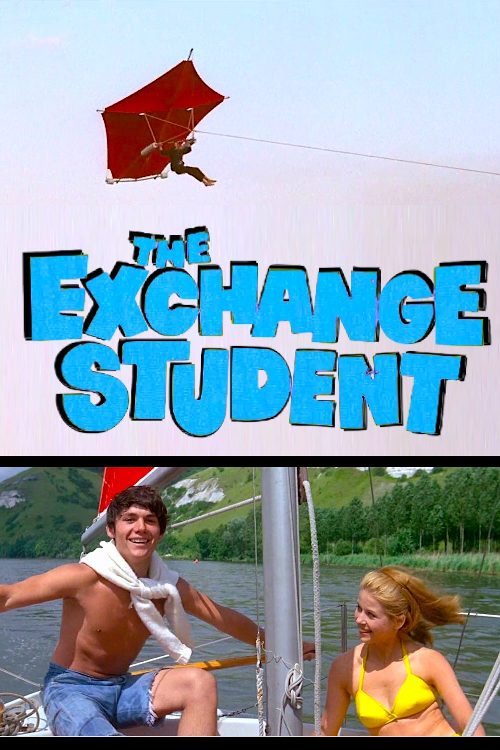
About The Exchange Student
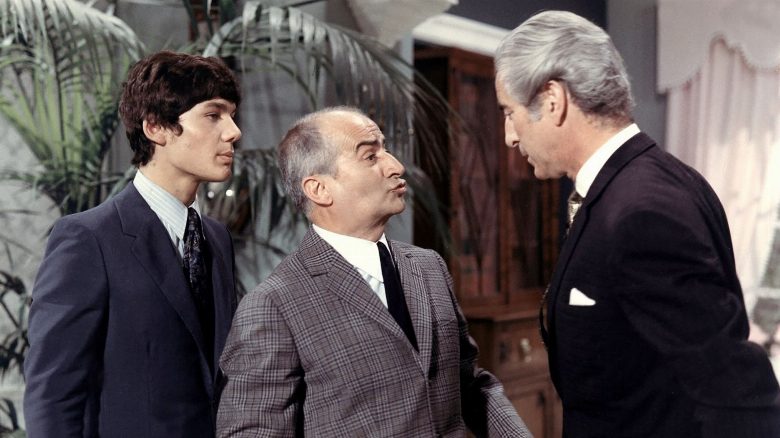
Monsieur Bosquier, the owner of a private school, is far from pleased when his eldest son, Philippe, fails his end of year exams. He decides to send his wayward offspring to England to improve his English. In exchange, Philippe’s host, a wealthy whisky distiller, Mac Farrel, will send his daughter, Shirley, to live with the Bosquiers in France. However, Philippe has already decided to spend the summer holidays on a yacht with his friends, so he sends a fellow student, Michonnet, to England in his place. The deception is soon discovered but things go from bad to worse when Philippe and Shirley fall in love and fly to Scotland to get married...
The mid-sixties marked a golden era for French lighthearted cinema, a period defined by a specific brand of frantic, situational humor that thrived on miscommunication and domestic chaos. Directed by Jean Girault, The Exchange Student stands as a quintessential artifact of this time, capturing the frantic energy of a bourgeois household grappling with the changing aspirations of its younger generation. While audiences today might associate the director primarily with his iconic gendarme series, this particular project leans into the classic trope of the generation gap, framing a rigid father figure against the backdrop of his son’s rebellious, albeit misguided, attempts to reclaim a summer vacation. It is a film that relies heavily on the comedic timing of its ensemble cast, who navigate a web of identity swaps and international misunderstandings with the breathless pace typical of French farce from that decade.
The narrative hook revolves around the desperate measures taken by a private school proprietor to ensure his son meets academic expectations. The premise thrives on the irony of a man who makes his living imparting knowledge but remains entirely oblivious to the secret machinations of his own household. By orchestrating a cross-channel student swap with a Scottish distiller, the protagonist inadvertently sets off a chain reaction of deception. What makes the film distinct is how it balances the stuffy, traditionalist environment of the French academic setting with the sudden introduction of a foreign cultural exchange. For viewers who enjoy the vintage charm of 1960s European comedies, this film offers a nostalgic look at a time when travel logistics and social expectations were far more restrictive, providing a fertile ground for the kind of chaotic narrative pivots that defined the genre.
Modern viewers who appreciate the intricate plotting of classic screwball comedies will likely find themselves entertained by the sheer audacity of the central ruse. The tension builds not from malicious intent, but from the frantic efforts of a young man trying to salvage his freedom while his father remains blinded by his own authoritative ego. It serves as a lighthearted exploration of autonomy and the inevitable friction between traditional values and youthful spontaneity. As the story shifts from the quiet hallways of a private academy to the romantic allure of Scotland, the film positions itself as a breezy, uncomplicated watch. It remains a notable entry in the filmography of the era, serving as a reminder of how high-stakes comedy was often built on the most fragile of lies.
Cast(32)