About The Gambler's Code
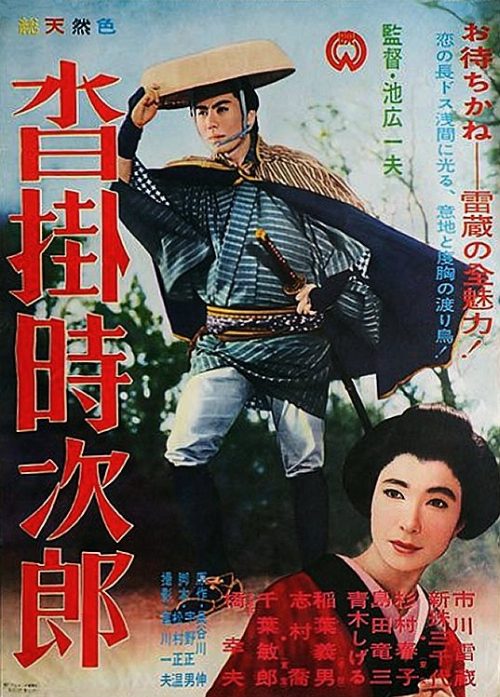
One of Japan's most popular stories is the tale of Kutsukake Tokijiro, a traveling gambler who finds that he must take care of the wife and child of a yakuza he had been forced by the code of the gamblers to fight man to man. In a brilliant performance from super-star Ichikawa Raizo, with strong support from two of the greats from Toho, Shimura Takashi (7 Samurai) and Aratama Michiyo (Sword of Doom) the heartfelt story reaches new heights. Tokijiro, having learned the true nature of the boss to whom he was obligated for having spent a night and eaten at the gang's headquarters takes up arms against them in a running battle fought across the back roads of the entire nation. Another powerful rendition of this superb story, it is not to be missed!
The mid-century era of Japanese cinema remains a goldmine for those of us who appreciate the intersection of stark moral dilemmas and the kinetic energy of the jidaigeki genre. Kazuo Ikehiro directs The Gambler’s Code with a precision that elevates the classic wandering ronin archetype into something far more emotionally resonant. By focusing on the internal conflict of a man bound by his own rigid set of ethics, the film captures a specific tension between personal loyalty and the corrupt structures of yakuza life. Raizo Ichikawa delivers a masterclass in restrained performance, portraying a drifter whose life is upended by an unexpected promise. It is the kind of storytelling that feels remarkably modern in its critique of blind obedience, echoing the thematic weight seen in contemporary South Indian revenge dramas where a protagonist must dismantle a corrupt system from within to protect the innocent.
What truly distinguishes this production is the legendary ensemble that elevates the material beyond a simple period piece. Having icons like Takashi Shimura and Michiyo Aratama share the frame with Ichikawa provides a gravitas that roots the high-stakes action in genuine human vulnerability. For viewers who enjoy the pacing of classic samurai cinema but crave the deep emotional stakes usually reserved for high-budget family epics, this film is an essential watch. It strips away the romanticization of the gambling underworld to reveal the heavy costs of living by a code that expects everything but offers nothing in return. The journey across the Japanese landscape functions not just as a backdrop, but as a path toward a hard-won redemption.
The Gambler’s Code speaks to a universal audience that appreciates character-driven conflict over mindless spectacle. Fans of the golden age of Asian cinema will find the cinematography and the deliberate, tension-filled editing to be a precursor to the stylized action sequences we admire in today’s global film landscape. Whether you are a devotee of historical dramas or someone who simply appreciates a well-crafted story about an underdog confronting overwhelming odds, this film offers a compelling look at the fragility of honor. It is a testament to the fact that even in a world defined by transactional relationships, a single act of conscience can trigger a powerful transformation. Those looking for a cinematic experience that balances historical texture with timeless storytelling will find this work both gripping and deeply satisfying.
Cast(11)